
The French government recently announced its intention to pass a new law to determine procedures for returning cultural property removed during the colonial period to its countries of origin, in a way that bypasses rigid, long-standing bureaucratic constraints. These assets include any tangible item of historical, artistic, or scientific value considered part of humanity’s shared heritage, which states are obligated to protect and prevent from illicit trafficking under international conventions.
Paris is thus opening the door to granting temporary exceptions to current legislation governing French museums, which is based on the principle of the inalienability of public collections (Inaliénabilité des collections publiques).
This raises a central question: does this law mark a genuine beginning toward justice for countries whose cultural property was seized during colonial times, or is it simply a symbolic ideation within a more complex political game?
This article first offers an analytical reading of the French bill: its historical, legal, and political dimensions. It then examines Iraqi antiquities held in French museum collections, addressing an ongoing debate in Iraq about whether such items could fall under the law. Finally, it outlines a “roadmap” from Paris to Baghdad, asking whether the law offers real opportunities or simply fuels cultural debate without changing reality.
First: The Bill and the Historical Framework of Restitution
Objects in French national museums are part of the public domain, meaning they are collectively owned and cannot be sold, transferred, or pledged. This principle dates back to the 1566 Edict of Moulins under King Charles IX.
In the 20th century, it expanded to include museum collections and became part of the French Heritage Code, protecting institutions like the Louvre and Musée d’Orsay from selling, donating, or returning items ensuring they remain the collective property of the French people.
Thus, any object in national collections is permanently inalienable unless a special law is passed by the French Parliament and approved by the Council of State, as happened in recent restitutions to African countries. The current proposal appears primarily aimed at Francophone Africa.
Overview of the Proposed Law
The proposal does not abolish inalienability but creates a two-track exception system (administrative and scientific) to allow returns without requiring a new law each time.
It covers the period 1815–1972, considered a “grey zone” lacking clear international regulation of cultural property.
- The starting point aligns with the Congress of Vienna (1814–1815), after which France returned some looted artworks. The endpoint is 1972, marking the enforcement of the 1970 UNESCO Convention against illicit cultural property trade.
Recent precedents include: Return of El Hadj Omar Tall’s sword to Senegal (2019); Return of a ritual drum to Ivory Coast (2021); Return of 26 royal objects to Benin (2021).

Under the proposed mechanism: A country submits a formal request; a scientific review verifies provenance; administrative review leads to an executive decree; and, the requesting state must prove its capacity to preserve and display the objects
However, key ambiguities remain: What counts as “illicit transfer”? Does it include legally exported artifacts under excavation agreements? Decisions ultimately remain subject to French political considerations and “national interest.”
Second: Iraqi Antiquities Under French Law
The issue of recovering Iraqi antiquities held in European museums, specifically French museums- opens up a horizon that goes beyond purely legal questions, touching instead on the very core of the relationship between national identity, history, and cultural diplomacy. It is not merely a dispute over the static ownership of artefacts, but a genuine test of Iraq’s ability to reclaim a civilisational memory removed under complex historical circumstances, and of France’s ability to reconcile its moral obligations with political pressures.
At its heart, the debate rests on the principle of “historical justice”: the recognition of plunder as part of the broader injustice of colonialism. This is a moral principle more than a strictly legal one. Such an approach inevitably raises major questions: should restitution apply only to objects taken by military force? Or should it also extend to excavations that were officially licensed at the time, according to the nineteenth-century system of “excavation permits and partage” — arrangements that granted European expeditions the right to divide among themselves the antiquities they uncovered?
This complexity makes the issue far less straightforward in regions such as Iraq, where foreign expeditions often operated under formal agreements with the Ottoman authorities, and later with the Iraqi state itself. Not all artefacts were removed by coercion, which at the time gave their transfer at least a formal legal cover. Thus, many artefacts left Iraq for the Louvre and other museums from the 1840s onwards, amid fierce competition between France and Britain over the antiquities of Mesopotamia.

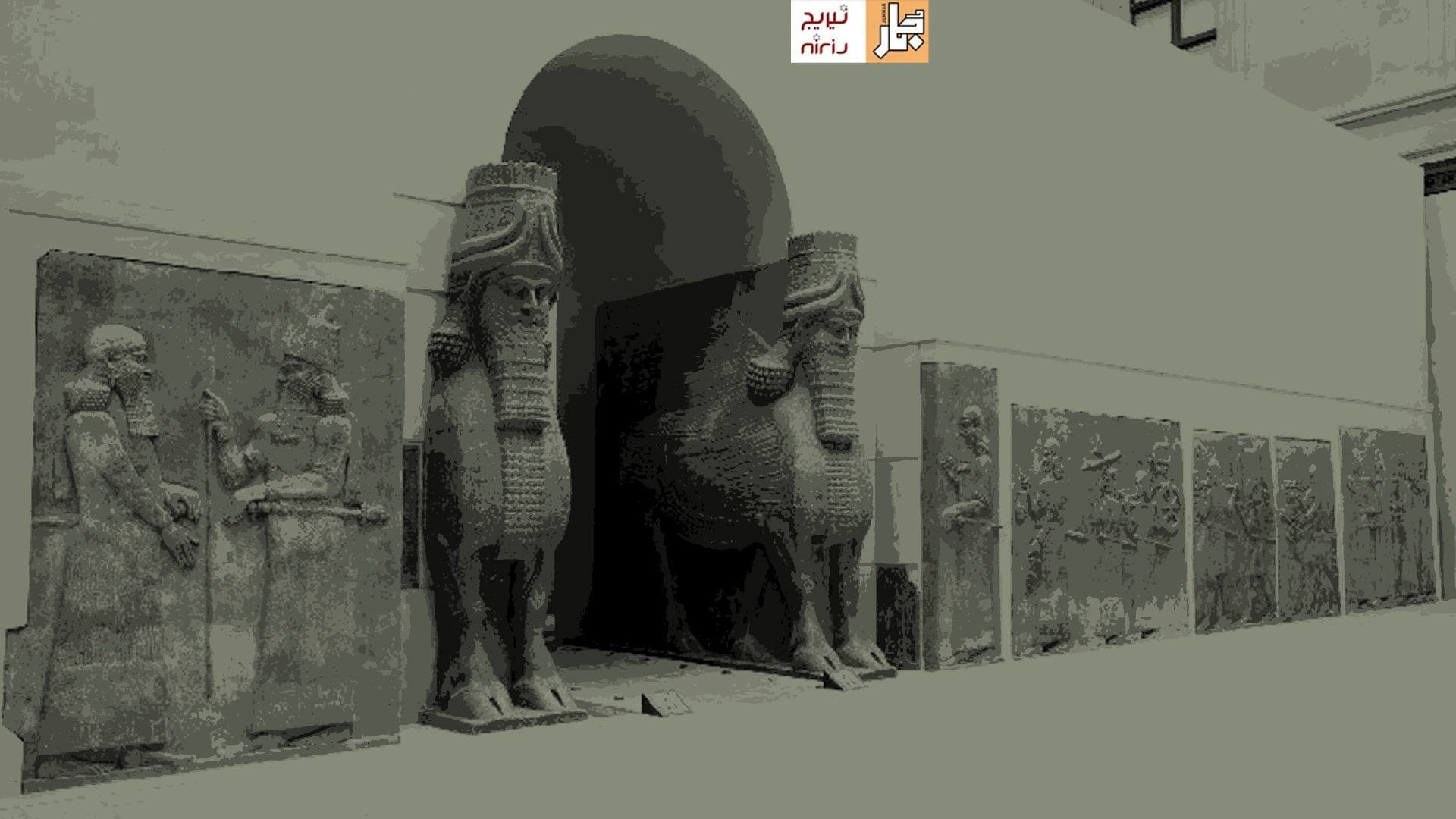
The French consul Paul-Émile Botta, serving as France’s consul in the Mosul Vilayet, began excavations at Khorsabad in 1842 and discovered the palace of Sargon II. He was soon followed by the Briton Austen Henry Layard in Nineveh. France. However, Botta moved first to capitalise on these discoveries, inaugurating the Louvre’s first “Assyrian Room” in 1847. Victor Place, also French consul in Mosul, continued Botta’s work between 1851 and 1855, followed later in the nineteenth century by Ernest de Sarzec, France’s consul in the Basra Vilayet.
Following Iraq’s independence, a new wave of expeditions began, most notably the work of André Parrot at Larsa in the 1930s, followed later by Jean-Claude Margueron. Cooperation culminated in the establishment of an Iraqi–French archaeological association in the 1970s, before all ties were severed by wars and sanctions from 1990 until the early twenty-first century. Collaboration in excavation and restoration was later resumed.
The Mesopotamian collections displayed in French museums, most notably the Louvre, were formed from artefacts uncovered during the excavations of French consuls in the nineteenth century, as well as from French archaeological missions working in Iraq during the twentieth century. They also include, of course, objects acquired directly through purchase, or through gifts and donations. Below are two tables covering both categories of holdings currently in the possession of French museums.
Appendix 3: Figures and Images


These excavations were not random; rather, they were backed by official Ottoman decrees preserved in archival records such as the İrade Dahiliye and the Sadâret Mektûb Kalemi. These documents set out the conditions for excavation, protection procedures, and even details such as the construction of housing for expedition teams, as happened with Botta in Mosul.
The Ottoman state also enacted its first law for the protection of antiquities in 1869, known as the Asar-ı Atika Nizamnâmesi. It established a system for dividing discovered artefacts between the discoverers, the state, and landowners, and prohibited their export without special permission from the Sultan. These regulations were later strengthened in 1874 and 1884.
Third: From Paris to Baghdad — A Roadmap
The restitution file today is not merely a legal dispute; it is a space where politics intersect with historical narratives. The recent French bill, which allows limited exceptions to the rule of “inalienability” in museum collections, gives Iraq a new legal opening, while simultaneously places it before serious challenges. France did not pass this law solely out of fairness toward others; rather, it seeks to reshape its international image as a cultural power managing “historical reconciliation” on its own terms.
The most pressing question remains: how can Iraq prove that certain artifacts were removed “illegally”?
During the Ottoman era, the three provinces of Mosul, Baghdad, and Basra were part of the internationally recognized Ottoman state, and agreements with European expeditions were sealed with official imperial decrees, also known as firmans. While these agreements undoubtedly reflected the imbalance of colonial power, they also constitute legal documents that are difficult to dismiss by today’s standards.
In addition, the conditions imposed by the French law, such as guaranteeing the display and preservation of the artifacts inside Iraq, raise practical questions: does Iraq today possess the museum infrastructure capable of preserving priceless objects such as the Stele of Naram-Sin or the Code of Hammurabi? And can the French museum be confident in Iraq’s ability to provide international-standard conservation conditions amid its complex political and security conditions?
The issue becomes even more complicated when modern borders are involved. Some Mesopotamian artifacts were discovered at sites that are today located in Iran (Susa), Turkey (Harran), or Syria (Mari). Any claim over them would push Iraq into a grey zone between national sovereignty and historical geography, requiring a discourse grounded in the “unity of Mesopotamian heritage” without causing friction with its neighbours.
It is clear that this confrontation cannot be settled through legal tools alone. What is needed is the construction of a “knowledge alliance” bringing together historians, archaeologists, and experts in international law to produce a narrative capable of persuading Western public opinion and creating moral pressure alongside legal pressure. Iraq could also pursue more flexible policies, such as embracing the principle of reciprocal loans, or the replication of original artifacts mechanisms already applied in successful examples: from the Louvre Museum in Paris lending the statue of the Sumerian prince Gudea to the Louvre Abu Dhabi; to Jordan lending one of the Ain Ghazal statues to the Louvre on a long-term basis renewable every 30 years


The journey from Paris to Baghdad will be long and complex. It begins with acknowledging that much of this heritage left under historically unjust conditions, even if technically legal. There is, perhaps, an underlying dimension of injustice that prompted France to consider legislating such a law in the first place. Consequently, any Iraqi effort must combine two tracks: legal realism on the one hand and leveraging the new international ethical climate on the other. Between these paths lies a more considered approach than simply waiting for others to return what was taken.
This article is published in partnership with the Iraqi Network for Investigative Journalism (NIRIJ). Adapted by Jummar from Arabic, available here.