Iraq’s sixth parliament: The votes rise as the political class holds firm 

Gilgamesh Nabil

01 Dec 2025

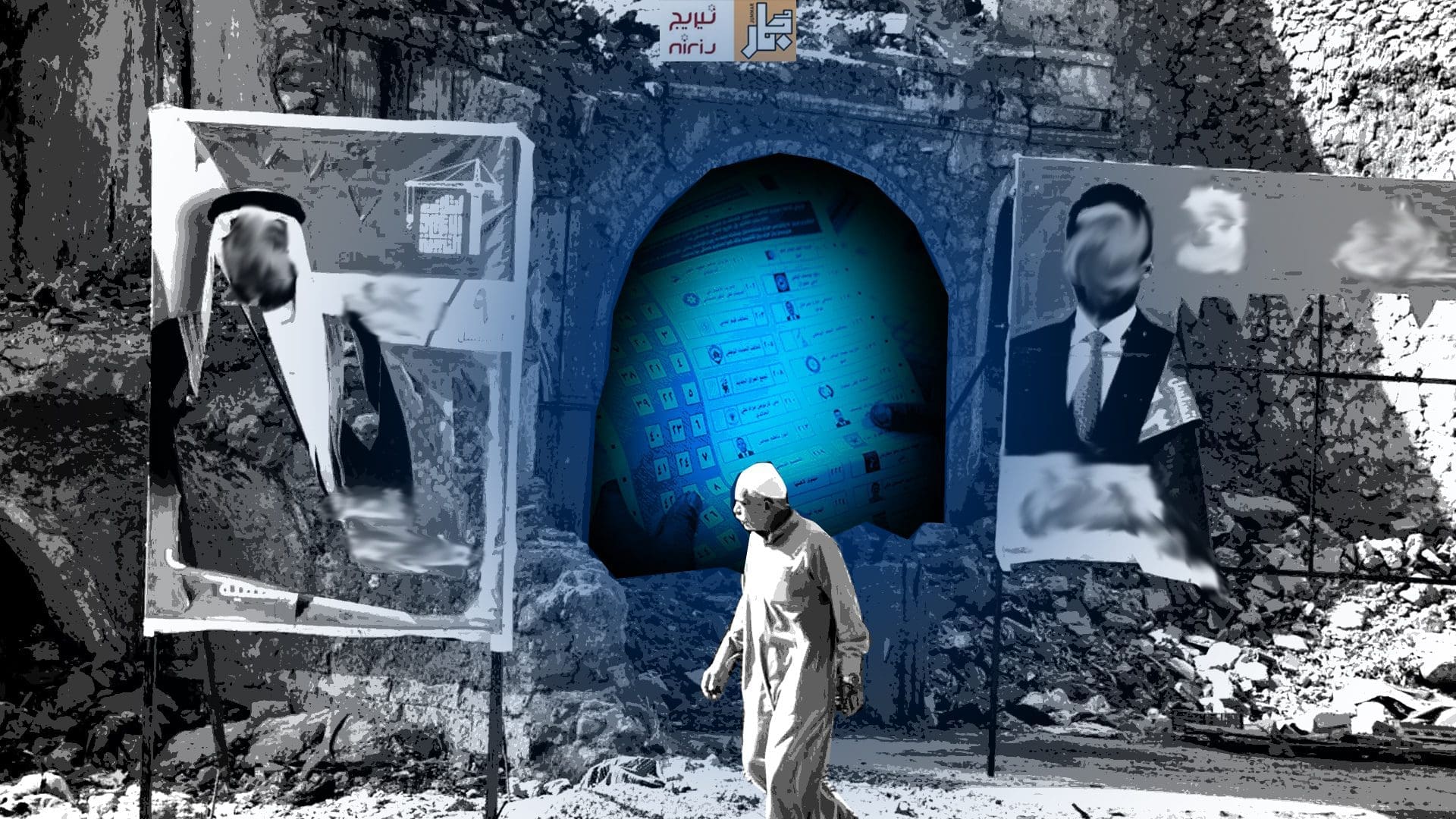
As Iraq’s sixth parliament takes shape, the faces and forces behind it echo a familiar political class. This piece unpacks the major results of the 2025 parliamentary elections and offers an analysis of the political landscape that lies ahead.

After months of speculation about the postponement of elections and predictions from the Sadrist movement that turnout would be too weak to sustain the vote, Iraq’s sixth parliamentary elections were held on schedule on 11 November. The day passed largely smoothly without major incidents, although minor attacks were reported at election centres in Basra and Baghdad’s Sadr City. Gunfire was also reported near polling stations in parts of Sulaymaniyah, Erbil and Diyala. 

Turnout appeared to surge compared to previous election cycles according to initial indicators. The Independent High Electoral Commission reported that 56.11 percent of voters who had updated their electoral cards cast ballots this year. Special voting by security forces reached 82.52 percent, and displaced Iraqis at 77.35 percent turnout. These figures mark a clear rise from May 2018, when participation stood at 44.55 percent, and from October 2021, when turnout fell to a post-2003 low of 41.05 percent. However, observers note that these rates will fall once the denominator includes all Iraqis of voting age, roughly 30 million people, regardless of registration status or turnout. By this broader count, turnout is closer to 40.95 percent. 

Sadrist boycott meets Kurdish–Sunni mobilisation 

Many anticipated that Muqtada Al-Sadr would backtrack just as he threatened to boycott the 2021 vote before winning 73 seats, only to withdraw his MPs in June 2022. This time, however, the boycott held, contributing to low turnout in several provinces: Maysan (40.11 percent), Baghdad’s Rusafa district, including Sadr City (41.55 percent), and Najaf (42.7 percent). These were among the provinces with the lowest participation rates. 

Meanwhile, turnout surged across the Kurdistan Region and Sunni-majority provinces. All provinces surpassing 60 percent turnout clustered in northern or north-western Iraq: Duhok (76 percent), Erbil (69 percent), Salah Al-Din (66.44 percent), Anbar (65.93 percent), Kirkuk (64.12 percent), and Nineveh (64.07 percent). 

This disparity revealed a deeply uneven electoral landscape that exacerbated sectarian tensions. Heated online rhetoric and TV debates over Baghdad’s demographic balance pushed some Sadrist-leaning voters to participate despite the boycott, casting their ballots for Prime Minister Mohammed Shia’ Al-Sudani’s list to undercut Nouri Al-Maliki and preserve the Shia demographic presence in the capital. Even so, Sadr City’s streets remained quiet, with only a handful of polling stations drawing steady crowds. Participation was similarly modest across the movement’s other strongholds in Baghdad. 

The Sadrists’ prolonged absence from the political scene, and the decline of their funding sources could have a significant impact on the movement’s cohesion. It may weaken its popular base as some supporters lose the financial and employment incentives once available through them, and it could prompt others to break away and join more active and influential Shia factions. 

Familiar blocs hold ground while others falter 

One of the biggest surprises of the sixth electoral cycle was the scale of losses among well-known political figures across the political spectrum. A number of high-profile candidates failed to secure seats, including Parliament Speaker Mahmoud Al-Mashhadani; Nasser Al-Ghannam and Abdullah Atheel Al-Nujaifi of the Sovereignty Alliance; Yahya Rasool and Ali Adhab from the State of Law Coalition; Dhirgham Al-Maliki from the Tasmeem Alliance; Sajad Salem of Al-Badil Alliance and Qusay Mahbuba, Basim Khashan and Hakim Shakir from Prime Minister Al-Sudani’s Reconstruction and Development List. Others who lost their seats included Dhafir Al-Ani of Taqaddum; Vian Dakhil of the Kurdistan Democratic Party; Mishaan Al-Jubouri and his son Yazan from the Suqoorna Alliance; and Sinan Osama Al-Nujaifi from the Azm Coalition. 

By contrast, the top vote-getters came from across the political map: Patriotic Union of Kurdistan (PUK) candidate Rebar Ahmed (96,000 votes) opted to remain governor of Kirkuk; Prime Minister Mohammed Al-Sudani (92,000); Taqaddum Party leader Mohammed Al-Halbousi (71,900); State of Law Coalition leader Nouri Al-Maliki (68,700); and, Kurdistan Islamic Union’s Jamal Kochar (58,000). 

Cohesion as strategy: Electoral lists beyond sectarian lines 

Consistent with previous cycles, the prime minister’s list once again topped the results, securing 46 seats, reflecting the long-standing dominance of incumbent-backed blocs. This was followed by the State of Law Coalition with 29 seats; the Sadiqoon Bloc led by Qais Al-Khazali with 27; Mohammed Al-Halbousi’s Taqaddum with 27; the Kurdistan Democratic Party (KDP) with 26; Hadi Al-Ameri’s Badr Organisation with 21; and Amar Al-Hakim’s State Forces Alliance with 18. 

Altogether, Shia-led lists secured 187 general seats, including a few in Sunni-majority areas. Sunni lists secured 77 seats, Kurdish parties won 56, and Yazidi candidates won one general seat outside the KDP, in addition to quota seats. 

The distribution of seats to cross-sect lists may suggest a positive shift. In practice, the results reaffirm the centrality of sectarian identity: political parties often nominated candidates outside their traditional constituencies to avoid losing ground in provinces where their base is thin, most notably in Nineveh. Sunni candidates on predominantly Shia lists may also pose challenges once parliament convenes, as their loyalties may be split. This could fracture blocs during major decisions, such as selecting the prime minister, and complicate and prolong the process of forming a government. 

Al-Sudani announced at the Middle East Peace and Security Forum at the American University of Duhok that his coalition would remain within the Coordination Framework, which constitutes 175 seats, maintaining control over half the seats in parliament. This outcome is familiar. Similar alignments have formed in past cycles, sometimes organically and sometimes through external pressure to maintain a Shia parliamentary majority. The most striking precedent was in 2010, when Ayad Allawi’s narrow win was overturned after the Federal Supreme Court reinterpreted the “largest bloc” to mean coalitions formed after, rather than from, the elections, reinforcing the status quo and limiting opportunities for real political change. 

Kurdish parties collectively secured 58 seats: 27 for the KDP, 18 for the PUK, five for Al-Mowqif, four for the Kurdistan Islamic Union, three for the New Generation Party, and one for Jama’at Al-Adl. These parties are not unified on key issues, and several have close ties to major Shia blocs. The KDP also maintains influence over several quota seats for Yazidis, Christians, and Faili Kurds, while the PUK secured a seat in Baghdad on Al-Sudani’s Reconstruction and Development List. The alliances are also not strictly ethnic: in Nineveh, as two Arab MPs represent the KDP, while Sunni candidates appeared on Al-Sudani’s lists in multiple provinces. In Basra, MP Zainab Khazaal Al-Tamimi won on Asaad Al-Eidani’s Tasmeem List with backing from Taqaddum. 

These shifts may indicate a gradual easing of sectarian boundaries and more strategic coordination across blocs to capture minority votes that would be lost in separate lists. But such alliances are fragile, and could undermine the cohesion of blocs during government formation, particularly in selecting the next prime minister. 

Electoral mechanisms and the power of money

This cycle brought renewed scrutiny over the Sainte-Laguë system: its accuracy in translating votes into seats and its tendency, which according to critics, favours major parties over smaller blocs and independents. Online discussions fixated on the KDP’s experience, which won more than a million votes but only 26 seats, fewer than the Sadiqoon Bloc, aligned with Asaib Ahl Al-Haq, despite its far lower vote count. The discrepancy reflects an important but often overlooked electoral rule: seat allocation is tied to provincial population size rather than voter turnout. 

Campaign financing remained a decisive factor, alongside tribal alliances, local networks, employment promises, and service commitments. Employees at several private universities reported pressure to cast votes for investors or their relatives under threat of penalties or dismissal. Vote-buying was also widely reported, from the sale of electoral cards to the distribution of phone-credit vouchers near polling stations. In parts of Diyala’s border districts, residents said parties with armed wings threatened to cut them off from access to cross-border trade with Iran unless they voted for those parties. In Al-Awja near Tikrit, some candidates joined Shia lists hoping to secure permission to return to their land. 

In disputed territories, Arab candidates and alliances appeared on KDP lists after pressure was placed on local farmers and residents. Consequently, the KDP secured five seats in Nineveh (constituting a majority in an Arab province) two of them won by Arab candidates. These outcomes raise questions, despite the fact that the KDP ultimately lost ground in Nineveh compared with 2021, when it won nine seats. 

Quota seats were similarly shaped by major parties. A number of Christian voters argued that the KDP effectively secured three of their seats, while Shia parties dominated the remaining two by mobilising Kurdish and Shia supporters to back allied Christian candidates. A similar pattern emerged in Yazidi quota seats, except for an independent Yazidi list, which won one seat and came close to a second outside the quota. 

Christians noted wryly that Christian candidates secured more votes than the estimated Christian population still residing in Iraq, now likely below 100,000 people. The exclusion of expatriates from voting further reduced the community’s ability to elect genuinely representative candidates. 

The defeat of civil forces

Civil and secular forces were hit hardest in this cycle. Neither Al-Badil nor the Civil Democratic Alliance, the two umbrellas under which most civil and Communist candidates ran, won a single seat. This was partly due to the reinstated Sainte-Laguë system, which favours established parties, and partly due to voter disillusionment with civil actors who emerged from the 2019 Tishreen protest movement but later defected to dominant blocs or focused on personal advancement. 

For some observers, the results underscored a key distinction: civil and secular-leaning voters hold their civil and secular representatives to higher standards and are quick to penalise what they see as political backtracking as compared to bigger identity-based blocs. When civil MPs failed to block the Ja‘fari Personal Status Law in the previous parliament, it cemented growing public scepticism that Tishreen-aligned forces have neither the cohesion nor the parliamentary weight needed to effect real legislative change. 

Regional shifts and the turn to pragmatism 

The continued rise of Iran-aligned blocs, including Sadiqoon and Badr, is likely to shape Iraq’s relations with the United States, especially under a Donald Trump presidency. These groups have themselves adopted more pragmatic tones as regional dynamics shift: the fall of the Assad regime, Iran’s waning influence in Lebanon, and attempts inside Iran to ease internal pressure amid economic strain and threats of renewed conflict with Israel. 

Across the region, Islamist parties have been recalibrating. Even some groups with jihadist roots have repositioned themselves as allies of the United States. This broader climate may nudge Iraq’s Islamist actors toward compromise, though a full ideological retreat would risk alienating their core constituencies. 

Distinctive features of Iraq’s elections 

Iraq’s elections have rarely ever mirrored social realities. High abstention rates despite some improvement in this cycle, and the exclusion of expatriates from voting, have distorted representation from the outset.  

At the provincial level, candidates with fewer votes can still secure seats if their lists perform well, whereas candidates with more votes elsewhere may be sidelined because higher-scoring candidates absorb the seats allocated to their bloc. The women’s quota works similarly, allowing candidates with fewer votes to replace those with more. After results are tallied, thousands of ballots are effectively wasted, as dozens of candidates receive only a handful of votes, sometimes just one or two. 

Minority representation is also skewed. Thousands of Shia and Kurdish voters backed candidates running in religious and ethnic quota seats, diluting the voice of the communities those seats are meant to represent. Layered onto this are armed coercion, party patronage, tribal loyalties and identity politics, creating a system that blends sectarian and ethnic calculations with service-based vote-seeking under a nominally democratic framework. In practice, outcomes are shaped less by voters and more so by post-election alliances, backroom bargains, and external pressure. 

The absence of a true opposition, a byproduct of Iraq’s consensus governments, further weakens parliamentary oversight, enabling corruption and patronage across the political spectrum with little resistance. 

These factors erode voters’ sense of agency and ability to influence change. The results announced at the polls often tell one story, while the alliances that emerge afterwards tells another — a disconnect that continues to undermine trust in the value of elections, even when participation rises.  

This article was originally published in Arabic, in partnership with the Iraqi Network for Investigative Journalism (NIRIJ), available here 

Read More

After months of speculation about the postponement of elections and predictions from the Sadrist movement that turnout would be too weak to sustain the vote, Iraq’s sixth parliamentary elections were held on schedule on 11 November. The day passed largely smoothly without major incidents, although minor attacks were reported at election centres in Basra and Baghdad’s Sadr City. Gunfire was also reported near polling stations in parts of Sulaymaniyah, Erbil and Diyala. 

Turnout appeared to surge compared to previous election cycles according to initial indicators. The Independent High Electoral Commission reported that 56.11 percent of voters who had updated their electoral cards cast ballots this year. Special voting by security forces reached 82.52 percent, and displaced Iraqis at 77.35 percent turnout. These figures mark a clear rise from May 2018, when participation stood at 44.55 percent, and from October 2021, when turnout fell to a post-2003 low of 41.05 percent. However, observers note that these rates will fall once the denominator includes all Iraqis of voting age, roughly 30 million people, regardless of registration status or turnout. By this broader count, turnout is closer to 40.95 percent. 

Sadrist boycott meets Kurdish–Sunni mobilisation 

Many anticipated that Muqtada Al-Sadr would backtrack just as he threatened to boycott the 2021 vote before winning 73 seats, only to withdraw his MPs in June 2022. This time, however, the boycott held, contributing to low turnout in several provinces: Maysan (40.11 percent), Baghdad’s Rusafa district, including Sadr City (41.55 percent), and Najaf (42.7 percent). These were among the provinces with the lowest participation rates. 

Meanwhile, turnout surged across the Kurdistan Region and Sunni-majority provinces. All provinces surpassing 60 percent turnout clustered in northern or north-western Iraq: Duhok (76 percent), Erbil (69 percent), Salah Al-Din (66.44 percent), Anbar (65.93 percent), Kirkuk (64.12 percent), and Nineveh (64.07 percent). 

This disparity revealed a deeply uneven electoral landscape that exacerbated sectarian tensions. Heated online rhetoric and TV debates over Baghdad’s demographic balance pushed some Sadrist-leaning voters to participate despite the boycott, casting their ballots for Prime Minister Mohammed Shia’ Al-Sudani’s list to undercut Nouri Al-Maliki and preserve the Shia demographic presence in the capital. Even so, Sadr City’s streets remained quiet, with only a handful of polling stations drawing steady crowds. Participation was similarly modest across the movement’s other strongholds in Baghdad. 

The Sadrists’ prolonged absence from the political scene, and the decline of their funding sources could have a significant impact on the movement’s cohesion. It may weaken its popular base as some supporters lose the financial and employment incentives once available through them, and it could prompt others to break away and join more active and influential Shia factions. 

Familiar blocs hold ground while others falter 

One of the biggest surprises of the sixth electoral cycle was the scale of losses among well-known political figures across the political spectrum. A number of high-profile candidates failed to secure seats, including Parliament Speaker Mahmoud Al-Mashhadani; Nasser Al-Ghannam and Abdullah Atheel Al-Nujaifi of the Sovereignty Alliance; Yahya Rasool and Ali Adhab from the State of Law Coalition; Dhirgham Al-Maliki from the Tasmeem Alliance; Sajad Salem of Al-Badil Alliance and Qusay Mahbuba, Basim Khashan and Hakim Shakir from Prime Minister Al-Sudani’s Reconstruction and Development List. Others who lost their seats included Dhafir Al-Ani of Taqaddum; Vian Dakhil of the Kurdistan Democratic Party; Mishaan Al-Jubouri and his son Yazan from the Suqoorna Alliance; and Sinan Osama Al-Nujaifi from the Azm Coalition. 

By contrast, the top vote-getters came from across the political map: Patriotic Union of Kurdistan (PUK) candidate Rebar Ahmed (96,000 votes) opted to remain governor of Kirkuk; Prime Minister Mohammed Al-Sudani (92,000); Taqaddum Party leader Mohammed Al-Halbousi (71,900); State of Law Coalition leader Nouri Al-Maliki (68,700); and, Kurdistan Islamic Union’s Jamal Kochar (58,000). 

Cohesion as strategy: Electoral lists beyond sectarian lines 

Consistent with previous cycles, the prime minister’s list once again topped the results, securing 46 seats, reflecting the long-standing dominance of incumbent-backed blocs. This was followed by the State of Law Coalition with 29 seats; the Sadiqoon Bloc led by Qais Al-Khazali with 27; Mohammed Al-Halbousi’s Taqaddum with 27; the Kurdistan Democratic Party (KDP) with 26; Hadi Al-Ameri’s Badr Organisation with 21; and Amar Al-Hakim’s State Forces Alliance with 18. 

Altogether, Shia-led lists secured 187 general seats, including a few in Sunni-majority areas. Sunni lists secured 77 seats, Kurdish parties won 56, and Yazidi candidates won one general seat outside the KDP, in addition to quota seats. 

The distribution of seats to cross-sect lists may suggest a positive shift. In practice, the results reaffirm the centrality of sectarian identity: political parties often nominated candidates outside their traditional constituencies to avoid losing ground in provinces where their base is thin, most notably in Nineveh. Sunni candidates on predominantly Shia lists may also pose challenges once parliament convenes, as their loyalties may be split. This could fracture blocs during major decisions, such as selecting the prime minister, and complicate and prolong the process of forming a government. 

Al-Sudani announced at the Middle East Peace and Security Forum at the American University of Duhok that his coalition would remain within the Coordination Framework, which constitutes 175 seats, maintaining control over half the seats in parliament. This outcome is familiar. Similar alignments have formed in past cycles, sometimes organically and sometimes through external pressure to maintain a Shia parliamentary majority. The most striking precedent was in 2010, when Ayad Allawi’s narrow win was overturned after the Federal Supreme Court reinterpreted the “largest bloc” to mean coalitions formed after, rather than from, the elections, reinforcing the status quo and limiting opportunities for real political change. 

Kurdish parties collectively secured 58 seats: 27 for the KDP, 18 for the PUK, five for Al-Mowqif, four for the Kurdistan Islamic Union, three for the New Generation Party, and one for Jama’at Al-Adl. These parties are not unified on key issues, and several have close ties to major Shia blocs. The KDP also maintains influence over several quota seats for Yazidis, Christians, and Faili Kurds, while the PUK secured a seat in Baghdad on Al-Sudani’s Reconstruction and Development List. The alliances are also not strictly ethnic: in Nineveh, as two Arab MPs represent the KDP, while Sunni candidates appeared on Al-Sudani’s lists in multiple provinces. In Basra, MP Zainab Khazaal Al-Tamimi won on Asaad Al-Eidani’s Tasmeem List with backing from Taqaddum. 

These shifts may indicate a gradual easing of sectarian boundaries and more strategic coordination across blocs to capture minority votes that would be lost in separate lists. But such alliances are fragile, and could undermine the cohesion of blocs during government formation, particularly in selecting the next prime minister. 

Electoral mechanisms and the power of money

This cycle brought renewed scrutiny over the Sainte-Laguë system: its accuracy in translating votes into seats and its tendency, which according to critics, favours major parties over smaller blocs and independents. Online discussions fixated on the KDP’s experience, which won more than a million votes but only 26 seats, fewer than the Sadiqoon Bloc, aligned with Asaib Ahl Al-Haq, despite its far lower vote count. The discrepancy reflects an important but often overlooked electoral rule: seat allocation is tied to provincial population size rather than voter turnout. 

Campaign financing remained a decisive factor, alongside tribal alliances, local networks, employment promises, and service commitments. Employees at several private universities reported pressure to cast votes for investors or their relatives under threat of penalties or dismissal. Vote-buying was also widely reported, from the sale of electoral cards to the distribution of phone-credit vouchers near polling stations. In parts of Diyala’s border districts, residents said parties with armed wings threatened to cut them off from access to cross-border trade with Iran unless they voted for those parties. In Al-Awja near Tikrit, some candidates joined Shia lists hoping to secure permission to return to their land. 

In disputed territories, Arab candidates and alliances appeared on KDP lists after pressure was placed on local farmers and residents. Consequently, the KDP secured five seats in Nineveh (constituting a majority in an Arab province) two of them won by Arab candidates. These outcomes raise questions, despite the fact that the KDP ultimately lost ground in Nineveh compared with 2021, when it won nine seats. 

Quota seats were similarly shaped by major parties. A number of Christian voters argued that the KDP effectively secured three of their seats, while Shia parties dominated the remaining two by mobilising Kurdish and Shia supporters to back allied Christian candidates. A similar pattern emerged in Yazidi quota seats, except for an independent Yazidi list, which won one seat and came close to a second outside the quota. 

Christians noted wryly that Christian candidates secured more votes than the estimated Christian population still residing in Iraq, now likely below 100,000 people. The exclusion of expatriates from voting further reduced the community’s ability to elect genuinely representative candidates. 

The defeat of civil forces

Civil and secular forces were hit hardest in this cycle. Neither Al-Badil nor the Civil Democratic Alliance, the two umbrellas under which most civil and Communist candidates ran, won a single seat. This was partly due to the reinstated Sainte-Laguë system, which favours established parties, and partly due to voter disillusionment with civil actors who emerged from the 2019 Tishreen protest movement but later defected to dominant blocs or focused on personal advancement. 

For some observers, the results underscored a key distinction: civil and secular-leaning voters hold their civil and secular representatives to higher standards and are quick to penalise what they see as political backtracking as compared to bigger identity-based blocs. When civil MPs failed to block the Ja‘fari Personal Status Law in the previous parliament, it cemented growing public scepticism that Tishreen-aligned forces have neither the cohesion nor the parliamentary weight needed to effect real legislative change. 

Regional shifts and the turn to pragmatism 

The continued rise of Iran-aligned blocs, including Sadiqoon and Badr, is likely to shape Iraq’s relations with the United States, especially under a Donald Trump presidency. These groups have themselves adopted more pragmatic tones as regional dynamics shift: the fall of the Assad regime, Iran’s waning influence in Lebanon, and attempts inside Iran to ease internal pressure amid economic strain and threats of renewed conflict with Israel. 

Across the region, Islamist parties have been recalibrating. Even some groups with jihadist roots have repositioned themselves as allies of the United States. This broader climate may nudge Iraq’s Islamist actors toward compromise, though a full ideological retreat would risk alienating their core constituencies. 

Distinctive features of Iraq’s elections 

Iraq’s elections have rarely ever mirrored social realities. High abstention rates despite some improvement in this cycle, and the exclusion of expatriates from voting, have distorted representation from the outset.  

At the provincial level, candidates with fewer votes can still secure seats if their lists perform well, whereas candidates with more votes elsewhere may be sidelined because higher-scoring candidates absorb the seats allocated to their bloc. The women’s quota works similarly, allowing candidates with fewer votes to replace those with more. After results are tallied, thousands of ballots are effectively wasted, as dozens of candidates receive only a handful of votes, sometimes just one or two. 

Minority representation is also skewed. Thousands of Shia and Kurdish voters backed candidates running in religious and ethnic quota seats, diluting the voice of the communities those seats are meant to represent. Layered onto this are armed coercion, party patronage, tribal loyalties and identity politics, creating a system that blends sectarian and ethnic calculations with service-based vote-seeking under a nominally democratic framework. In practice, outcomes are shaped less by voters and more so by post-election alliances, backroom bargains, and external pressure. 

The absence of a true opposition, a byproduct of Iraq’s consensus governments, further weakens parliamentary oversight, enabling corruption and patronage across the political spectrum with little resistance. 

These factors erode voters’ sense of agency and ability to influence change. The results announced at the polls often tell one story, while the alliances that emerge afterwards tells another — a disconnect that continues to undermine trust in the value of elections, even when participation rises.  

This article was originally published in Arabic, in partnership with the Iraqi Network for Investigative Journalism (NIRIJ), available here