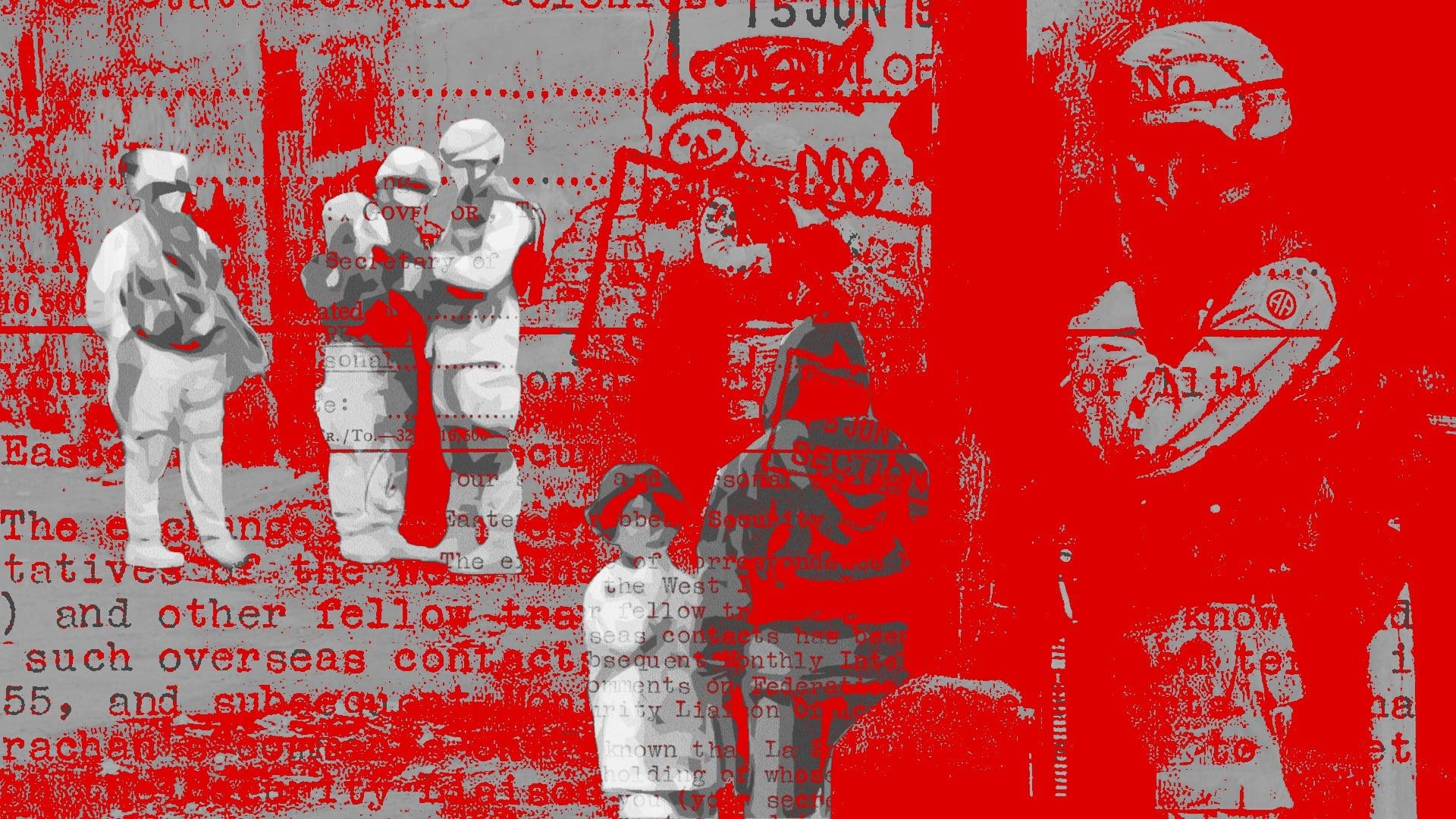

More than twenty years after the invasion of Iraq, a new set of British government documents has quietly entered the public domain.
Long before these files were released, Iraqis had already been documenting the abuses they were subjected to. For Iraqi communities – many of whom lived with the consequences of these abuses long before they were officially acknowledged – the release does not so much uncover new information as confirm, in the British state’s own language, what had long been known on the ground.
Released in late 2025 under the UK’s “20-year rule” – a system requiring most internal government records to be made public two decades after their creation – these files, transferred to The National Archives in London, include internal correspondence, briefing notes, and legal summaries produced during the height of the US-led occupation of Iraq. They were never meant for Iraqi readers, nor for public scrutiny. They were written for ministers, senior officials, and military leaders grappling with the consequences of a war that was already beginning to unravel. It is within this context that the following documents should be read.
The material spans a wide range of issues, but among the most striking are documents addressing allegations of abuse by British forces in Iraq: deaths in custody, the mistreatment of detainees, failures of investigation, and persistent concerns about legal accountability.
The structure and authorship of the archive
In mid-July 2005, a bundle of confidential British government papers circulated quietly at the very top of the state. Addressed simply to “Tony” and signed “JR”– the distinct signature of John Reid, then Secretary of State for Defence – the documents were stamped CONFIDENTIAL – PERSONAL, filed just as Iraq was entering its most volatile chapter. While Reid and Blair discussed “legal exposure” in London, July 2005 was a month of relentless carnage in Iraq; it saw a surge in suicide bombings and sectarian kidnappings, occurring against the backdrop of the country’s first post-invasion elections.
This bundle is now visible in the National Archives, where I accessed it. Far from being an isolated memo, it acted as the political focal point for a wider collection of Ministry of Defence reports and legal assessments tracking the fallout of the Baha Mousa case and subsequent court-martial proceedings. By focusing on this specific mid-July intervention, we can see the precise moment where high-level policy shifted from monitoring legal developments to direct prime ministerial concern over the venue of military prosecutions.

These were not battlefield reports, nor the kind of retrospective inquiries written once political danger had passed. They were working documents: briefing notes, annexes, and summaries produced while cases were still unfolding, while soldiers remained under investigation, and while the British state was testing the limits of how legal rules governing overseas military conduct would be applied. Their focus is telling. Iraq appears not as a lived place, nor Iraqis as victims of harm, but as a site of institutional risk – one that threatened the military justice system, the chain of command, and the government’s legal exposure.
Read together, the papers show that abuse and deaths in custody were recognised early on. What follows is not moral debate, but administrative containment. Handwritten annotations –– including one noting “PM see but no comments” – trace the documents’ passage through the office of Tony Blair. As the Prime Minister who had single-handedly staked Britain’s international standing on the “moral” necessity of the 2003 invasion, Blair was the chief architect of the war. He had personally committed British troops to the coalition, often bypassing deep domestic and parliamentary opposition.
By the time these files reached his desk, however, the grand rhetoric of liberation had been replaced by a clinical silence. The lack of substantive marginal discussion by the Prime Minister is itself revealing. These papers were not designed to prompt strategic reconsideration based on the UK government’s obligations as an occupying power; they were meant to steady an increasingly unstable situation, ensuring that the legal fallout remained managed at the highest level of the state.
The public mask vs. the private panic
The archive reveals a striking gap between the British state’s public image and its internal reality. Draft speeches from the period, marked “Check Against Delivery,” are filled with moralising, aspirational language: “obligation of international solidarity” and highlighting the “rehabilitation of 2,535 schools” as evidence of a successful transition toward a “secure democracy.”
Behind the scenes, however, one concern dominates: a “crisis of confidence” among senior military leaders, particularly former Chiefs of the Defence Staff. The memos reveal a story of institutional anxiety and legal alarm at what is framed as outside interference – namely human rights law, civilian courts, and the possible reach of international jurisdiction. While officials publicly championed “universal rights,” they privately fretted over the “risk of prosecution” and its potential impact on “services’ morale.” The government was not only conducting a war; it was carefully managing two parallel narratives — one designed for public consumption, the other for internal survival. For Iraqis on the receiving end of these operations, there was no such separation: the language of “stability” concealed experiences of detention, abuse, and loss.
Acknowledging abuse, managing consequences
Contrary to later public narratives that stressed uncertainty or disputed facts, the documents themselves explicitly acknowledge that abuse occurred. This was shown in the case of Baha Mousa, an Iraqi civilian who died in British custody in Basra in September 2003.
The location was significant: as the first major urban centre to fall during the 2003 invasion, Basra had been designated the primary “British zone” of control. Following the “Battle of Basra” – the first large-scale engagement of the war for UK forces – the city became the laboratory for the British military’s claim that their “softer” colonial experience made them better suited for peacekeeping than their American counterparts. The death of Baha Mousa at a temporary detention facility in the city shattered that narrative.
The internal language is unambiguous. Mousa is described as a civilian who died following “sustained assault” while detained by British soldiers, with responsibility clearly attributed to members of the Queen’s Lancashire Regiment.
The family’s response is recorded with bureaucratic precision. Compensation was offered and refused. The family demanded a public inquiry. The Ministry of Defence declined. This refusal became legally consequential when, in December 2004, the High Court ruled that the UK’s obligations under the European Convention on Human Rights extended to “outposts of the state’s authority” abroad. The UK was found to be in breach of the Human Rights Act, its national law, for failing to properly investigate Mousa’s death.
What matters in the archive is not simply the ruling itself, but how it is interpreted internally. The judgment is framed as a dangerous expansion of jurisdiction — a precedent capable of pulling overseas military operations into the reach of domestic human rights law.
One of the most revealing moments appears in a handwritten note in the margins of a July 2005 brief addressing military unease.
It reads: “but we should say in return, these cases will not be referred to CPS.”
This marginalia suggests a direct political intervention in the legal process – a promise to shield military personnel from civilian prosecution in order to preserve the chain of command. Accountability is treated not as an ethical obligation, but as a liability to be managed. For families seeking justice, this translated into cases that stalled, narrowed, or never reached meaningful prosecution.
The International Criminal Court as a contained risk
Alongside domestic human rights law, the International Criminal Court (ICC) loomed as a persistent concern. One note concedes that British personnel could, in theory, face ICC prosecution: “In extreme circumstances this is true.” The admission is immediately neutralised. Officials insist there are “good reasons for believing that such prosecutions will not in fact take place.”
As revealed in internal July 2005 briefing notes to the Prime Minister, the reassurance offered was procedural rather than moral. The Ministry of Defence acknowledged that while the ICC Prosecutor is obliged to review every complaint, ‘however frivolous,’ most allegations were internally dismissed as ‘spurious or unsubstantiated.’
The archives show that the government relied on the doctrine of complementarity to ensure that as long as the UK appeared ‘able and willing’ to investigate its own, international jurisdiction could be avoided. Under this principle of international law, the ICC is a “court of last resort”; it can only intervene if a national legal system is proven to be unwilling or unable to investigate its own war crimes.
By maintaining a cycle of internal military inquiries and courts-martial, the UK could technically satisfy this “able and willing” threshold; as long as the British legal machinery was seen to be in motion, the ICC was locked out. This position was punctuated by a handwritten marginal note insisting that this legal friction ‘must not’ undermine military authority.

The archive suggests that the UK investigated just enough to satisfy the ICC’s threshold—a strategy of jurisdictional shielding designed to keep the Hague at bay. Accountability became instrumental: a tool for managing exposure rather than confronting harm or ensuring justice and redress.
The “Grey Zone”: private military companies and the outsourcing of risk
As legal pressure mounted around cases like Baha Mousa’s, the archive reveals a strategic shift toward the regulation and use of Private Military and Security Companies (PMSCs). By 2005, the scale of privatization in Iraq was unprecedented; for the first time in modern warfare, private contractors nearly equaled the number of uniformed soldiers. Firms like Blackwater, Erinys, and Aegis operated in a legal vacuum, shielded by Order 17 – a decree issued by occupation authorities that granted contractors immunity from prosecution under Iraqi law. This created a landscape where thousands of armed actors were effectively beyond the reach of local or international justice.
The documents acknowledge that it was becoming “difficult to make a clear distinction” between the roles of the military and those of private contractors. The motivation for blurring these lines was not merely operational, but political. One file explicitly notes that governments could increasingly treat such companies as “partners rather than as a potential source of embarrassment.” By pushing military activity into this contractual “grey zone,” the state began to outsource the political cost of violence. In this framework, abuse committed by a contractor could be framed as a private “compliance failure” or a breach of contract rather than a war crime. While abuse by a soldier became a crisis of state legitimacy, contractors provided a buffer. This allowed the British state to maintain force on the ground while shielding itself from the “embarrassment” of the legal exposure and public inquiries that were then dogging the regular army.
Four cases, one institutional anxiety
An annex to the July 2005 briefing summarises four cases that, taken together, illustrate the growing strain on the military justice system and the anxiety it generated within the chain of command.
In one case, four soldiers from the Royal Regiment of Fusiliers were court-martialled for the “mal-treatment” of Iraqi civilians. The abuse came to light only after photographs — showing prisoners being humiliated, including images involving forklift trucks — were developed by a shop assistant. The archive treats the episode as a catastrophe of public exposure as much as of criminal wrongdoing.
Another case centres on Trooper Williams, internally described as a “disaster.” Williams shot and killed an Iraqi man, Hassan Abbas Said, during an attempted restraint. Acting on incorrect legal advice, his Commanding Officer dismissed the case without a hearing. When the matter later entered the civilian system, the CPS offered no evidence. The documents frame this evasion of accountability as an issue of jurisdiction.
The case of Baha Mousa generated what the documents describe as “significant unease” among the Chiefs of Staff. It marked the first time a Commanding Officer –Colonel Jorge Mendonça – faced potential war crimes charges. The archive reveals that the prospect of command responsibility being subject to criminal scrutiny was treated as fundamentally “destabilising” to the military structure.
However, while the military fretted over legal “interference,” the reality for the victims was far more visceral. Baha Mousa died in custody with 93 separate injuries. His father, Daoud Mousa, believed his son’s death was not a mere lack of discipline but a targeted act of retaliation after he reported soldiers for looting:
“I think they knew the one I was pointing to was my son. Therefore, they wanted revenge against me.”
The documents highlight the military’s fear of “civilian” legal encroachment, yet for the family, the “closing of ranks” within the military meant that despite findings of “corporate failure,” true criminal accountability remained out of reach. When an apology was eventually offered by the lawyer of the only soldier convicted, Daoud Mousa rejected the gesture with a finality that cut through the procedural language of the briefing notes:
“I will not accept the apology of a criminal.”
Finally, the death of Sergeant Steven Roberts, killed by friendly fire when a tank chain gun was fired at an Iraqi civilian throwing stones, is acknowledged as having been followed by a “concerted attempt by the Army chain of command to frustrate the investigation.” The documents note the “far-reaching implications” such interference could have for military justice.
Iraqi perspectives: art, memory and the limits of accountability
To understand how the Iraq war and its aftermath were experienced, it is instructive to turn to Iraqi voices living in Britain during the invasion. For writer and playwright Hassan Abdulrazzak, the 2003 invasion was defined by a coexistence of dread and fragile hope. “I told my friends, ‘Look, they’re going to invade,’” he recalls.” I said, ‘No, it doesn’t matter. America is so wounded, they’re just going to be like a bull in a china shop.’”
When the internal documents from the Ministry of Defence emerged, they confirmed a reality many Iraqis had already intuited.
“After Abu Ghraib, nothing was a surprise anymore,” Abdulrazzak reflects.
He views British abuses not as aberrations, but as part of a broader occupation culture where “shared techniques of interrogation and torture” were common practice.
However, Abdulrazzak argues that the subsequent British inquiry process often functions as a strategy of attrition rather than a path to justice. He characterises the “British way” as a cycle of limited remits and delays until “everyone has retired” and the truth is “kicked into the long grass.” For him, true accountability is meaningless without consequence:
“Unless somebody high up goes behind bars, these things don’t really have a bite. People feel they can get away with it.”
This prolonged cycle of violence and non-resolution carries a heavy psychological cost. Abdulrazzak explains that while the public can become numb to the steady drip of numbers and news reports, the human brain eventually reaches a breaking point.

“There is just one pile on top of the other until, psychologically, your brain wants to switch off,” he explains. In this context, official documentation – no matter how revealing – cannot restore moral recognition on its own.
“If you are Iraqi, one of the hardest things is to try and resist being desensitised… It actually requires a piece of art to make you feel it again.”
He argues that it is less about being “shocked” by these archives and more about the British public finally paying attention to their own records as a shared, painful history.
Asked what he would want the British public to take from these files, Abdulrazzak directs his message to those who still insist there was “something good” about empire.
“To them, I would say: look at your own records. These archives aren’t Iraqi government documents – they are British documents, and they reveal cover-ups and atrocities by the state’s own admission.”
Ultimately, the failure is cultural as much as it is legal. Without a cultural reckoning, legal findings remain procedural, isolated from public memory, and easy to ignore.
“As a storyteller, I would ask: where are the stories about that?” While other forms of abuse are frequently dramatized in British life, violence carried out by British forces abroad remains largely absent.
“Don’t think this isn’t part of your history,” he insists. “It is. A great story – a true story – is buried in these archives.”
The documents do more than confirm what many Iraqis already knew; they show the limits of accountability the British state was prepared to tolerate. The violence was documented, anticipated, and internally processed, yet consistently diverted into questions of jurisdiction and procedure. In that sense, these archives are not only about Iraq. They illuminate a governing logic that continues to shape how liberal democracies respond to the harms they produce.
This piece is part of a special edition marking the 2003 US-led war on Iraq. Explore other articles in the series here:
- Protest as Inheritance: Growing up under the aftermath of the Iraq war by Hannah al-Khafaji
- I fled the war. It followed me by Safa Najaf