
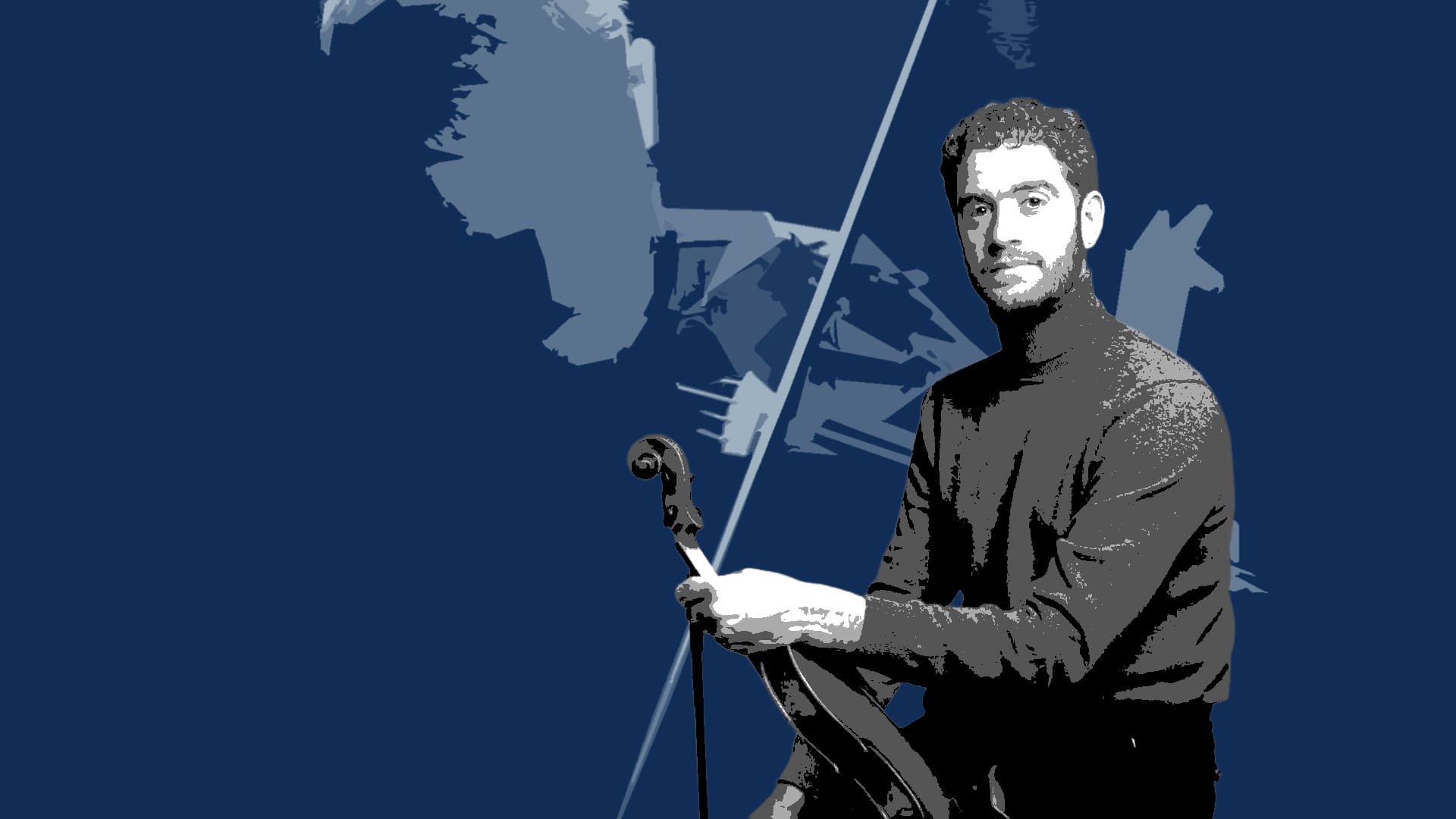

As a child in Amman, Layth Sidiq listened from a corner as Farida Muhammad Ali sang in his family’s home. The Iraqi maqam reciter was among the musicians who visited for dinner, evenings that often became small performances. For a boy already studying the violin, these encounters opened another way of hearing.
His household was Iraqi in its food, celebrations and everyday life. His musical education followed a different geography. Both parents had attended Baghdad’s Music and Ballet School, where their training centred on Western European classical music. In Jordan, his father taught piano at the conservatory in Amman and conducted its orchestra. The repertoire Layth practised, and the composers whose lives he read about, belonged largely to that same tradition.
He tells Jummar that his search for a musical voice became bound up with a question of identity: ‘How do I represent the music of where I come from?’
Born in Baghdad and raised in Jordan, Sidiq would later study in England and the United States. Becoming a musician involved an increasingly difficult question: how could he describe the music of where he came from? There was a point in adulthood when he felt unable to answer.
The search for an answer would change his playing, his understanding of himself, and the power he believed a musician held.
An education within reach, and out of earshot
Sidiq speaks with affection for the classical tradition that formed him. Mozart, Bach and Beethoven were central to his early musical life. He also questions the imbalance of an education in Arab countries that gives such sustained attention to Western European repertoire while leaving other musical knowledge insufficiently explored.

He connects that imbalance to the region’s colonial history. His question concerns what conservatories choose to teach, and what those choices make available to a young musician trying to understand their own surroundings.
His family home offered encounters that extended beyond the curriculum. Their Iraqi hospitality invited artists visiting Jordan from Germany, France and Italy, as well as Iraq and Egypt, to dinner and a stay at their house. Sidiq fondly remembers watching and absorbing their performances. Farida’s singing remains a particularly clear memory: a sound that interrupted the familiarity of his training and demanded another kind of attention.
Yet proximity could only take him so far. Speaking Arabic, growing up with Iraqi parents and hearing Arab musicians did not give him an instinctive command of maqam.
‘It doesn’t mean that just because I speak the language, I can play the music.’
He would have to become a beginner in a tradition he felt responsible for understanding.
Learning the grammar of maqam
At Berklee College of Music in the United States, where he completed his bachelor’s and master’s degrees, Sidiq studied with Palestinian-American violinist and oud player Simon Shaheen.
A lesson could begin with Shaheen picking up his violin and improvising phrases within a particular maqam. Sidiq’s task was to reproduce them as precisely as possible.
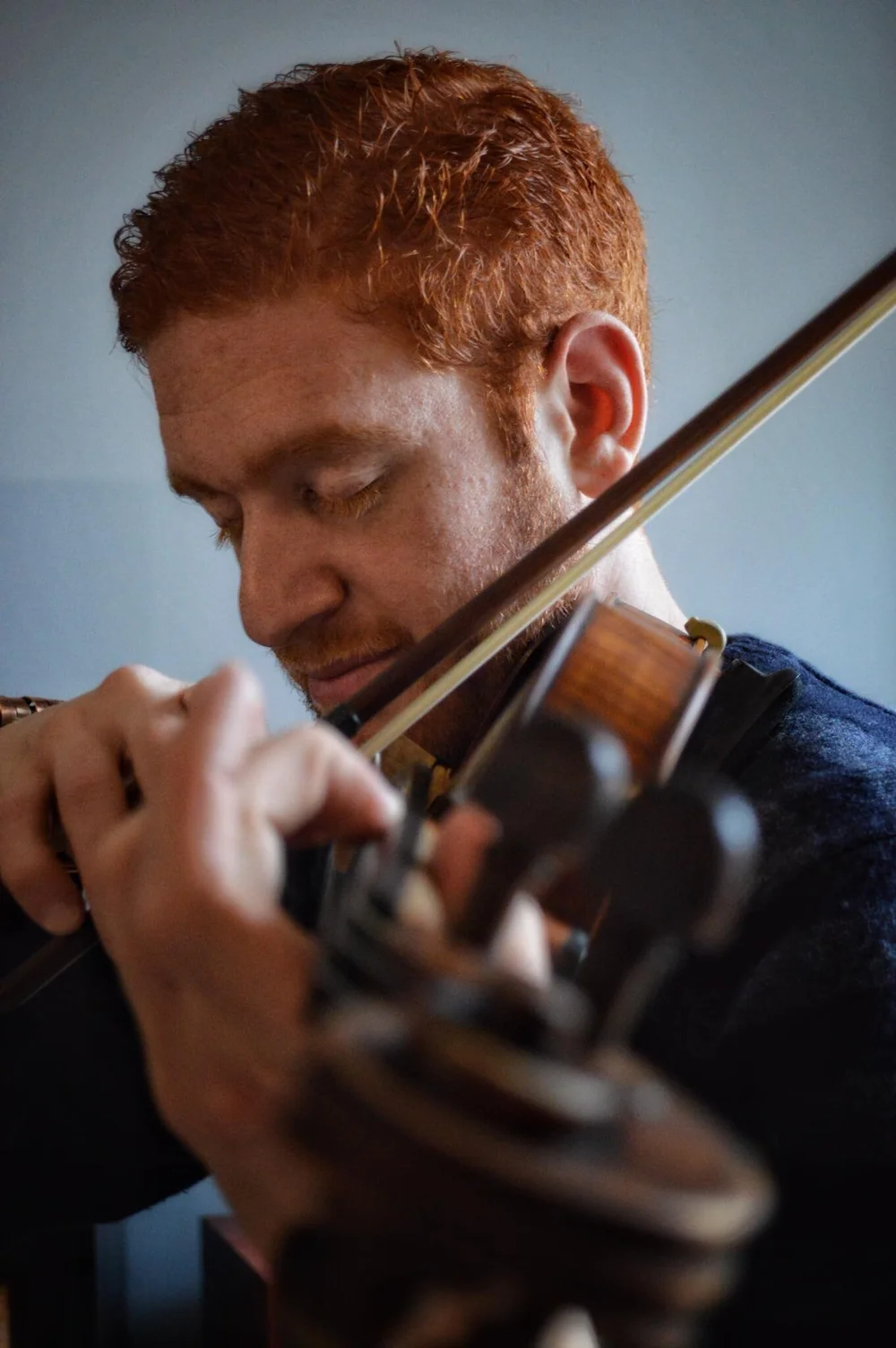
He resisted the exercise at first. Young musicians are urged to find their own sound; here, he was being asked to copy someone else’s. The apparent contradiction unsettled him.
‘There was a lot of moments of frustration when I felt that I wasn’t worthy to play this music.’ he tells Jummar.

Gradually, his fingers began to find the phrases. Repetition brought an understanding of detail: how a musical idea was shaped, how it moved, how it acquired its particular character.
Sidiq compares this process to learning Spanish, his third language. A beginner learns how to order coffee, greet someone or ask for help. Meaning emerges through phrases, and through the accent that makes them intelligible. Musical learning required a similar attention.
Only after those phrases became familiar could he begin interpreting them for himself. His artistic voice developed through the patient work of listening closely to another.
Alongside his lessons, he listened extensively and transcribed vocal improvisations, writing down what he heard before playing it back. He also sought guidance from Iraqi maqam specialists, including Hamid al-Saadi and Hussein al-Azami, recording sessions on his phone to revisit afterwards.
His inquiry extends across maqam traditions, from Egypt to Iraq and sometimes the Gulf. He recognises differences in what maqam means across these settings, alongside the musical connections that run through them.
For listeners in the diaspora, those connections can also be personal. An Iraqi audience may recognise Fairuz; a Syrian listener may know Foug al-Nakhl. Recordings and radio have helped make this repertoire part of a shared Arab upbringing.
Sidiq continues to describe himself as a student. There are always further layers to uncover.
Sound, character and artistic identity
Another decisive education came through Berklee’s Global Jazz Institute during his master’s studies in 2015–2016.
Jazz brought him into a musical history and practice he had not grown up knowing intimately. That year demanded sustained immersion. Among the artists he encountered, he noticed something he wanted for himself: musicians whose identity could be recognised in their sound.
That recognition changed his ambitions. Technical accomplishment remained essential, but he began thinking about what would make someone seek him out specifically for a concert or recording. He wanted collaborators to hear a reason to ask for Layth Sidiq.
The distinction also concerned the person behind the instrument. He wanted to be someone others valued working with, as well as someone whose playing they recognised. The invitation to collaborate mattered to him as an expression of trust in both his musical abilities as well as his character.

‘I want people to say, “We want to work with Layth because we like his sound and we also like him as a person,”’ he explains.
Being a person others wanted to work with became part of his artistic ambition. As he developed a sound that listeners could recognise, he also wanted to consider who they would encounter beyond the playing.
The programme widened his understanding of musical responsibility. He began to ask how the skills developed through years of study and performance could serve a wider social purpose, particularly through education.
‘Music is bigger than just performance and entertainment,’ he says.
This became another way of thinking about his future: what could he contribute as a musician, and where could that contribution have an effect? Teaching and cultural projects offered ways to share the knowledge he was acquiring, giving others opportunities to encounter and participate in musical traditions. His search for an individual voice was becoming connected to a broader sense of identity, expression and responsibility towards the people who might learn from it.
A musician’s work continued beyond the applause.
The care of listening
When Sidiq discusses preparing a concert, he describes the emotional movement of a programme. A lullaby can draw listeners towards childhood. A more uplifting piece can change the atmosphere; something darker can disturb it again.
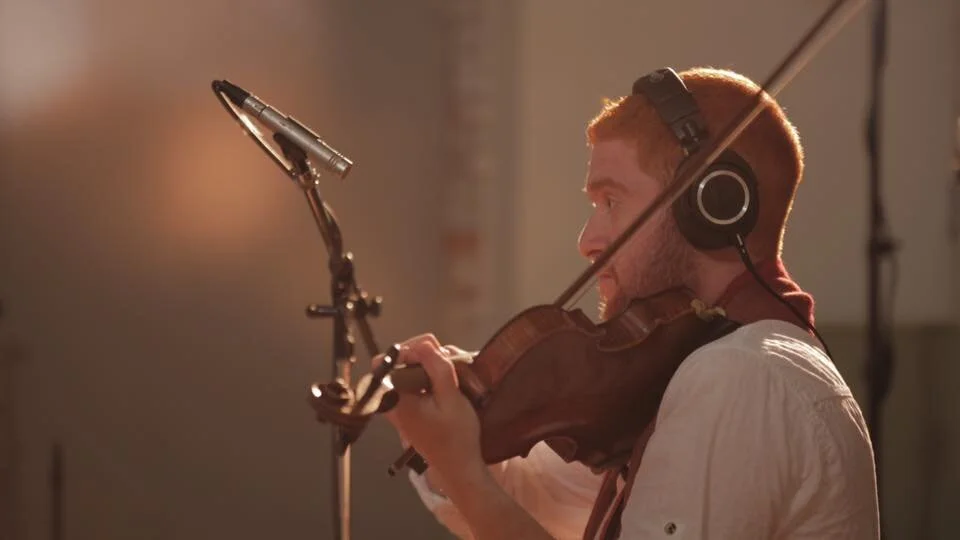
These decisions require care. Audiences bring memories into a hall, and a musician can help bring them to the surface.
‘Being an artist is so much bigger than notes and music,’ he says.
After performances, listeners tell him about family histories and parts of their childhood his music has allowed them to revisit. On stage, he also feels a connection to his roots through rhythm, ornamentation, maqam and the small decisions within a phrase.

Sidiq describes himself as a mosaic, formed through the places, people and musical traditions that have shaped his life. Baghdad, where he was born, is its point of origin. His Iraqi parents sustained that connection through the culture, food and celebrations of their home, while his upbringing in Jordan and subsequent studies in England and the United States brought further layers to his understanding of himself.
These experiences inform a musical voice whose connection to Iraq is both personal and continually explored. Through his study of maqam, his repertoire and the details of his playing, Sidiq gives that inheritance an expression shaped by the many worlds he has encountered.
Quiet work
In a classroom far from Iraq, an Iraqi song can become a moment of recognition: a child hears part of their family’s culture treated as knowledge worth sharing. For Sidiq, that experience is among the most powerful possibilities of music education.

Through Carnegie Hall’s Musical Explorers programme, he helped develop a curriculum introducing primary school children to Iraqi folk music. Melodies and rhythms were taught alongside the details of everyday life, traditions and food. Iraq entered the classroom through things a child could sing, learn and ask about.
For children whose backgrounds are rarely reflected in their lessons, he describes the significance of seeing their culture given that attention.
‘I’m being heard. My culture means something,’ is the experience he wants for children, including his own..

His enthusiasm carries echoes of his own education, and the knowledge he later had to seek for himself. These programmes create opportunities for children to encounter their inheritance early, while giving their classmates a way to understand the lives and histories around them. Iraqi culture becomes part of a shared education, with Iraqi children recognised as belonging within it.
That recognition takes on particular weight when he speaks about displacement. He points to Action for Hope’s work with young people, including refugees, who use music to ‘preserve their identity, especially because they’ve been displaced in many ways’.
For young people separated from familiar surroundings, learning a musical tradition can offer a way to sustain a connection through their own participation. A song becomes something they can perform, interpret and share. They have a role in its continuation.
Sidiq sees encouragement in the young people seeking out maqam and improvisation, both in Europe and across the Arab world. Their interest makes the work of teachers, cultural organisations and fellow musicians essential. An inheritance needs opportunities to be learned, and people willing to make those opportunities available.
‘You do the work and the work has an effect,’ he says, ‘and then that effect multiplies and multiplies and multiplies.’
This is the value he finds in ‘quiet work’: its consequences continue in other people’s lives.
As a child in Amman, Sidiq listened from a corner while musicians sang in his parents’ home. Today, his educational work extends something of that invitation to another generation. For an Iraqi child growing up elsewhere, hearing their culture welcomed into a classroom can affirm that Iraq belongs within their education, their imagination and the future they are making.


