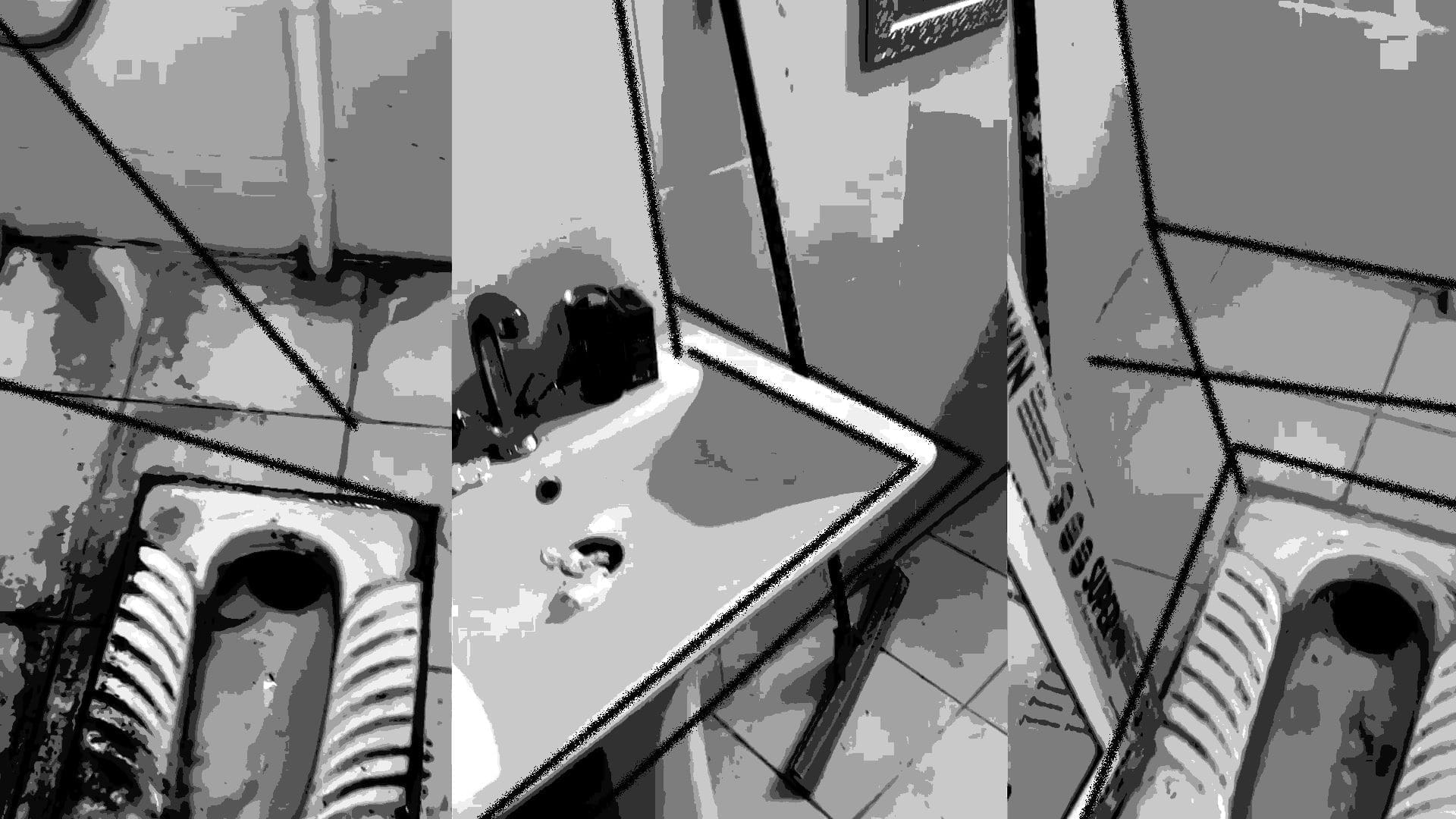

“Don’t drink water before going out.” This is one of the first rules girls are taught. There is simply no place to relieve a basic human need, to empty the bladder or bowels. Our bodies are taught to hold our needs in when we are in public spaces. While this is neither healthy nor humane, many of us endure this harsh reality, negotiating with our own bodies.
But how are we expected to manage menstrual bleeding in the heat of summer or the cold of winter? What about pregnant women, who need frequent bathroom access? Or women with diabetes, who experience increased urination? Or those suffering from urinary tract or gastrointestinal conditions, such as haemorrhoids, who require clean and accessible facilities?
In 2010, the United Nations General Assembly adopted Resolution A/RES/64/292, recognising the right to water and sanitation. The resolution affirms that access to safe drinking water and adequate sanitation is a fundamental human right. It calls on member states, including Iraq, to take the necessary steps to ensure this right, particularly for marginalised groups.
Although the resolution is not legally binding in the same way as international treaties, it serves as a legal and moral reference point. It outlines the obligations of states before the international community and UN bodies such as the United Nations Children’s Fund (UNICEF), the United Nations Development Programme (UNDP), and the United Nations Human Settlements Programme (UN-Habitat). The resolution urges governments to develop clear national plans to guarantee this right for all citizens, including within schools, healthcare facilities, and workplaces.
In Iraq, however, this international commitment has not translated into any comprehensive policy. The absence of safe well-equipped toilets for women and girls, particularly in schools and public spaces, continues to undermine basic rights, expose women to health risks, and limit their access to education and work.
A report by the United Nations Office for Project Services (UNOPS) highlights that women and girls are disproportionately affected by poor or inadequate sanitation facilities, particularly in relation to menstrual hygiene, pregnancy, and childbirth. Ignoring these needs contributes to higher absenteeism, school dropout rates, and reduced participation in public life and the labour market.
Addressing this requires a systemic response. Ministries such as those of Education, Health, and Construction and Housing alongside local sanitation authorities must review infrastructure through a gender-sensitive lens, treating access to toilets not as a luxury, but as a basic right.
What does it mean when there are no women’s toilets?
“At school, we used to hold it in, or urinate without washing.” At just six years old, Amal,29, from Nasiriyah, learned her first life lesson as a girl in an environment that fails to meet her most basic human needs. It was not only a lesson in poor infrastructure, but in silence, shame, and psychological pressure.
In Amal’s school, the only available toilet had no running water. Its sewage system was “broken and overflowing”. There was no waste bin. More than twenty years later, the smell still lingers in her memory, along with the sight of insects crawling across the floor.
Doaa,27, from Baghdad, recalls a similar image. “Broken tiles, no water, and an overwhelming absence of cleanliness. That’s the one image that never fades.” As a child, she was forced to use an unusable toilet, leaving her deeply distressed by the stench of faeces, urine, flies, and the complete lack of hygiene.
For Amal and Doaa, one of their most basic rights, the right to use a toilet, was violated in the earliest years of their lives. They are likely not alone. Women make up 49.8% of Iraq’s population, according to 2024 statistics, including millions of students and workers across both public and private sectors.
When Amal was forced to hold her urine for long hours, like Doaa and Mariam, she developed a urinary tract infection (UTI). A 2022 study published in the U.S. National Library of Medicine highlighted that holding in urine carries health risks and can lead to UTIs. Retaining urine for prolonged periods allows bacteria in the urethra, the lower part of the urinary tract, to multiply. If urine remains in the bladder for too long, bacteria can ascend to the kidneys, potentially causing a serious infection that can become life-threatening if left untreated.
The study found that 88% of women reported being forced to hold their urine due to the absence of any sanitation facilities, even those which are shared, during long journeys. Eighty-seven% said they held it in due to the lack of women-specific facilities, and 90% preferred holding their urine even when toilets were available, due to bad hygiene.
Doaa also recalls contracting a fungal infection known as candida. Dr. Ban Abdul Jabbar, a gynaecologist at Rusafa Health Directorate in Baghdad, explains that this is a common vaginal fungal infection caused by an overgrowth of candida which is a type of fungus that naturally lives on the skin and inside the body, including the mouth, throat, intestines, and vagina, without causing harm. Changes in the vaginal environment can trigger its overgrowth, leading to infection.
Dr. Ban Abdul Jabbar also points to the potential risk of transmitting infections through toilets, particularly those considered to be Western-style, and recommends the use of toilet seat covers as a protective measure against contamination.
Poor attendance due to poor facilities
The first time we experience menstruation can leave a lasting mark on our relationship with our bodies. In that sensitive and pivotal moment, we need understanding, preparation, and a safe space. But in a country where finding a usable toilet is difficult, this experience often unfolds without privacy, meaningful support, or safety.
“There was panic in the classroom,” Doaa recalls, describing the sight of blood on her classmate’s socks in the third year of middle school. At that age, most girls in her conservative city knew nothing about menstruation. Even the girl herself, who stood frozen, unsure what to do, tears streaming down her face, was overwhelmed by a sense of shame. She remained there, bleeding, until a teacher intervened. Doaa says, “She took her to the bathroom we were only allowed to use in secret”. This was the teachers’ restroom, which students were not allowed to use. Despite the cold weather, the teacher washed the socks and gave them back to her to wear while still wet. There was no alternative. “I will never forget that moment,” Doaa adds.
The entire class learned what had happened, not because anyone explained menstruation, but because the blood became visible on the girl’s clothes. Doaa blames the absence of proper toilets. A private, accessible space might have spared her classmate the shock and humiliation.
For Mariam, 24, from Salah al-Din, a similarly distressing scene is etched in her memory. A classmate in secondary school bled through her light-coloured uniform, the stain visible on her blouse. She spent the entire school day, seven to eight hours in the summer heat, soaked in blood. The girls formed a human shield around her on the way home. Mariam explains, “One walked in front of her and two behind her until we got her home.”
To avoid such situations, Mariam often skipped school on the first day of her period, as many of her classmates did. Absences hurt their grades and academic performance by causing them to miss lessons and exams. In addition, Kawthar Al-Mohammadawi, founder of the “Saqya for Relief and Development”, confirms that many low-income female students are forced to drop out of school because they cannot afford sanitary pads.
Their suffering is compounded by the absence or poor condition of toilets, especially in schools in districts and rural areas. Al-Mohammadawi receives frequent complaints from mothers, particularly when daughters enter puberty.
According to Iraq’s Central Statistical Organisation, girls are twice as likely as boys to drop out of school. There are no detailed, up‑to‑date statistics on the reasons. However, a source in the Education Ministry describes the situation as “catastrophic” and says that poor girls’ toilets, which have been the subject of parental complaints for years, are likely one cause of dropout, despite there being no official figures.
Using sanitary pads for extended periods without changing them regularly can also expose women to infections, explains gynaecologist Dr. Ban Abdul Jabbar. This is due to the toxic materials found in the cheap commercial brands widely sold in markets. During menstruation, the cervix is more open and vulnerable to bacteria and toxic substances found in these products.
How do society and institutions reinforce toilet taboos?
Having a decent toilet could have spared Amal and her classmates many humiliating situations. But the absence of waste bins created two new problems. The first was hygiene, odours and bacteria. Amal explains, “When we needed to change our pads, where would we throw them? There were no bins… We used to wrap them in paper, put them back in our bags, take them home, and throw them away there.”
The second problem was shame. Even when a waste bin was eventually provided, the school principal scolded the students for using it to dispose of sanitary pads.
“She [teacher] went from class to class, shouting at us and insulting us, saying: ‘You are not allowed to throw pads in the bin… it’s shameful, sinful, and a scandalous! Throw them in your family’s trash, not the school’s.’”
UNICEF affirms that menstrual hygiene management is not a luxury. It is a right tied to dignity, health, and gender equality. When a girl or a working woman is denied a safe space to change her sanitary pad, or lacks access to clean water and a waste bin, the issue goes beyond physical discomfort. It affects her sense of safety and belonging. These seemingly small details entrench exclusion and deepen inequalities in educational and work environments.
Although menstruation is a natural biological process, it is still treated as a source of shame, something to be hidden at all costs, even among women. This is what Amal and her classmates experienced as they tried to conceal their sanitary pads, even in all-female spaces.
In 2017, when Doaa entered a university in Baghdad as an evening student, she and her classmates faced another challenge. All the building’s toilets were locked. There were no guards or maintenance staff during the evening shift. The administration justified the closures saying, “We don’t have the staff to clean or supervise them.”
For an entire academic year, every time they got their period, Doaa and her classmates had to walk to another college that kept one bathroom open for female students, forcing them to wait in long queues.
The following year, when the same issue persisted, Doaa decided to speak out. She started with the department coordinator, stating, “Sorry, but we are not animals.”
The coordinator was surprised by her tone. Girls are often too embarrassed to demand even their most basic rights. Some may not even realise that such demands are legitimate rights.
Doaa reminded the woman coordinator that she should understand their needs. “You’re a professor, you know what it means to be a girl at this age. I must cross three colleges just to reach a bathroom, while each department has three toilets, which are all locked.” The journey took her more than 30 minutes.
After a week of persistent demands, their request was temporarily granted. But within a week, all department toilets were shut again except that single one, with the same excuses about supervision and cleaning. Doaa describes how they were forced to adapt. Instead of spending their break eating or preparing for their next lecture, they would rush to the bathroom. “We started lining up during the short 15-minute break and we’d still be late.” Eventually, the situation returned to what it had been.
The search for a toilet extends into the workplace
The struggle to find a toilet does not end at school. It extends into the workplace, where women spend time and energy in environments that fail to meet the most basic conditions of dignity.
In 2019, Amal did not initially understand why colleagues, both men and women, mocked her for asking whether there was a women-only bathroom. She recalls, “My question was treated as scandalous. They said, ‘Doesn’t she feel ashamed asking about a bathroom? She wants a bathroom!’” It was not just surprise. It was ridicule directed at a basic human need.
Later, Amal discovered that there was no women’s toilet at the workplace. Female employees were forced to use a bathroom which was shared with male colleagues, usually only when absolutely necessity. To avoid this, some women deliberately reduced their water intake or avoided drinking fluids altogether during working hours. In some cases, they used a private bathroom inside an apartment belonging to a female colleague.
This happens despite the workplace being described as “tribal,” where mixing is supposedly disapproved of. Yet this social conservatism did not translate into gender‑sensitive design or management. Instead, the lack of a women’s toilet forced women into mixed facilities, making “mixing” suddenly acceptable. Shared facilities expose women to violations of their bodily and religious privacy. Women who wear the abaya need to remove it before using the toilet, something that becomes difficult in the presence of men. As a result, many avoid using the bathroom altogether. Those who are forced to use it may face comments, intrusive looks, or subtle harassment. Jokes about how often they use the restroom, suggestive remarks, or lingering stares have become part of the daily work environment.
Mariam had a similar experience as the only female employee at a private media organisation. There was no women’s restroom, and she had to use shared facilities. At times, she resorted to taking sick leave just to avoid the discomfort and embarrassment. Comments such as, “Oh, I get what’s going on with you,” were said jokingly, but carried hurtful implications, particularly in a culture where menstruation is treated as shameful and tied to inferiority.
Amal recounts that, as the number of employees grew, the shared bathroom became insufficient. Together with her colleagues, she demanded a women-only restroom for over three years. They tried to convince the department’s director and supervisors but, each time, their demand was met with disbelief, as if asking for a toilet was unreasonable.
Their demand was rejected on the grounds that women made up only one-eighth of the workforce. From the administration’s perspective, largely represented by men, it did not justify allocating resources for such a “small” group.
Amal and her colleagues persisted, explaining their menstrual needs and health issues such as UTIs, diabetes, diarrhoea, and pregnancy. Some brought their children to work, requiring child‑friendly spaces. After sustained pressure and repeated appeals, they finally secured a women-only bathroom. It was small, with one squat toilet, one Western-style toilet, and a sink. By contrast, the men’s bathroom included four squat toilets, two Western toilets, and four sinks. The new women-only facility was also located far from their office, meaning wasted time and criticism for being late.
Toilets without maintenance
Even where toilets exist, poor maintenance can cause health issues, something Doaa and her colleagues experienced.
Doaa describes the cleanliness of her workplace bathroom as relatively acceptable compared to other institutions she had worked in. But suddenly, she began experiencing symptoms of UTIs and internal pain. When she spoke to her colleagues, she discovered they were suffering from similar symptoms. After consulting a general practitioner, they were referred to a gynaecologist, who emphasised the importance of clean water in toilets.
When they raised this with the administration, they were shocked to learn that the building’s water tank had not been cleaned since 2003.
Doaa, Amal, and Mariam all suffered infections and illnesses that affected their physical health. They are far from alone. Dr. Ban Abdul Jabbar confirms the link between poor sanitation conditions and infections such as UTIs, emphasising how the absence of safe, hygienic toilets directly contributes to these health risks.
Amal and her colleagues’ relief at finally having a women-only bathroom did not last long. For an entire year, the facility lacked basic services, including a functioning water pump. Eventually, the women purchased one at their own expense. They also took on the responsibility of buying cleaning supplies and rotating cleaning duties among themselves.
Amal explains, “Now all the taps are broken, the doors are damaged and won’t close properly, and there are no repairs at all. There’s no water heater either.”
An International Labour Organization (ILO) report defines excessively long hours as 50 hours or more per week. The report reveals that, in Iraq, 22.5% of women and 51.5% of men work such long hours, meaning many women spend extended time in workplaces that do not provide their most basic needs and rights. Women’s labour force participation rate in Iraq aged 15 and over stands at just 10.6%.
Despite statistics on women’s participation in the workforce, there is little data on working conditions, including whether basic facilities like toilets are available and functional. Is there a usable toilet? Is it women-only? Does it provide privacy and cleanliness?
Many building designs assume men and women use toilets in the same way and for equal lengths of time. They overlook women’s needs for sinks inside cubicles, dedicated sanitary pad bins, and more space for accompanying children or elders. This design blindness overloads women’s toilets, lengthens queues, and reinforces gender disparities in privacy and safety. As a result, inadequate infrastructure disproportionately affects women, yet the government has not taken serious steps to address this crisis. UNICEF attributes limited access to water, sanitation, and hygiene (WASH) services in Iraq to several factors including insufficient public funding, which accounts for less than 1% of the government’s annual expenditure.
Cities that do not see our bodies
In her book No Place to Go: How Public Toilets Fail Our Private Needs, feminist writer Leslie Lowe argues that public toilets are a microcosm of a society’s values and priorities. Her critique goes beyond infrastructure and into a deeper inquiry: who is public space designed for in the first place?
Public toilets are not merely a service. They reflect how urban planners and decision-makers imagine their users. When the “typical user” is implicitly assumed to be an able-bodied man, or a young worker moving alone without caregiving responsibilities, all people, including women, whose lives do not fit that model, are pushed to the margins.
In Iraq, the absence or poor condition of public toilets is not only the result of weak urban planning, but also of a culture that treats the needs of women as secondary and taboo. Talking about toilets, hygiene, or menstruation is often considered shameful, a perception that shapes urban policy where sanitation is not seen as a priority. As a result, cities become harsher for women. Employees are forced to return home just to use the bathroom, students avoid drinking water at school, and market vendors spend entire days without access to safe facilities.
Doaa recalls an incident in a government office. When an elderly woman asked to use the bathroom, employees searched for the key while she sat on a metal bench, anxious, uncomfortable, and visibly embarrassed.
During her own pregnancy, Doaa avoided drinking water before leaving home, fearing being forced to use a dirty or locked toilet.
Lowe also highlights how people with disabilities are among the most marginalised in this context. Even in developed cities, their needs are often overlooked in urban planning. In a country already struggling with weak infrastructure, such as Iraq, their exclusion is even more severe.
Architect Mariam Shawkat, who herself lives with a disability, explains that the problem of public toilets in Iraq is not simply a lack of services. It is a direct result of urban and architectural planning decisions which are based on standardised models that ignore diverse users.
“The city is designed around a single, stereotypical user: a young, able-bodied man. This reflects the absence of a human-centred approach in architectural thinking,” she says.
What is often called “neutral design” is a hidden bias. It ignores the physical and social differences between people. “Designing public toilets with equal space for men and women is not fair,” Mariam explains. “Women need more time, and more space, for movement, changing, or accompanying children.”
Even when such facilities exist, their design often creates dysfunction. Cramped stalls, poor ventilation, and no waiting areas or changing spaces creates stress. In many cases, mirrors and sinks are placed directly at the entrance, exposing women’s privacy. This could easily be resolved by adding a small transitional space.
Mariam emphasises that gender-responsive planning does not mean “feminising” public space. It means designing for equity. Architects can make a huge difference simply by rethinking layouts, window orientation, signage, and cubicle size to better serve disabled women, mothers, and elders. “Cities designed from a male perspective have ignored the details of women’s everyday lives,” she adds.
As Lowe concludes, the conversation about toilets is not just about infrastructure. It is about dignity and equality. The right to access a safe and clean toilet is not a luxury, but a measure of justice in a city. When space is designed with human difference in mind, we begin to build cities where everybody can exist with dignity and without fear. Only then will girls be able to use the bathroom freely, and women drink water without hesitation.