
What Happens to Water at the End of the Tigris and Euphrates: Water sustains oil fields while Basra runs dry
19 Jan 2026
As Basra’s water crisis deepens, large volumes of water are being diverted to Iraq’s oil fields for reservoir injection. This investigation examines how oil production drains resources from people and farmland in one of the country’s most water-stressed regions.
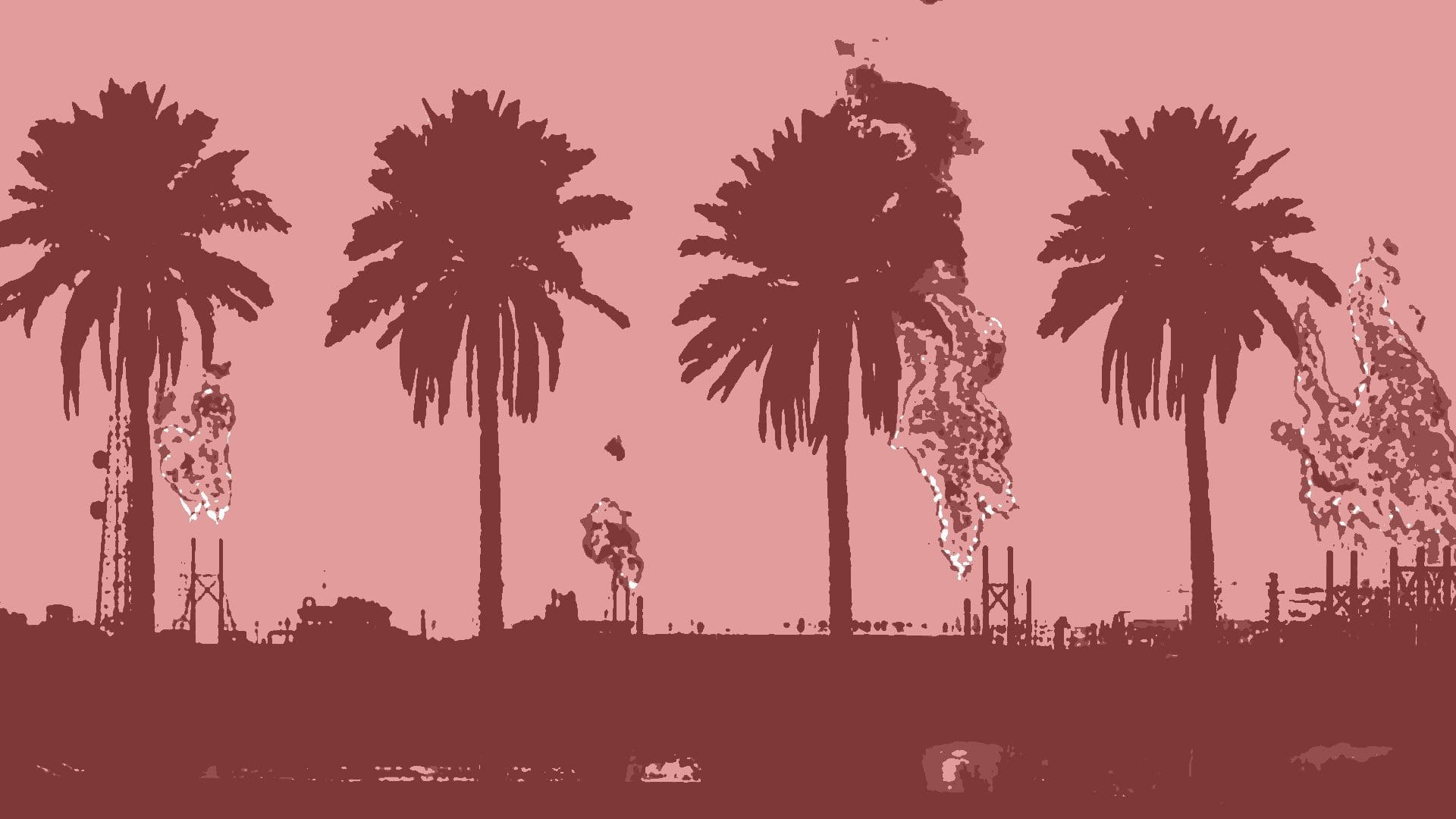
At the far end of the Tigris and Euphrates, where the two rivers meet and merge into the Shatt Al-Arab river, a farmer from Al-Qurna district stands on land cracked so deeply it now resembles the desert. He looks toward the palm trees that sustained his city for generations, then says:
“The water is being taken from us,” he says, “and buried underground.”
Just a few kilometres away, massive pumps roar inside water-injection stations at the Rumaila oil field, forcing hundreds of thousands of barrels of water deep into underground reservoirs. Their sound is relentless, like a machine that never pauses — as if it is swallowing what remains of the river’s life.
Here, two lines intersect but never meet: residents searching for water to drink and farm, and an oil industry that depends on water to keep producing.
Years of water scarcity have shaped this crisis. Releases from upstream countries have declined. Rainfall has dropped. Desertification increases, orchards wither, and agricultural land collapses. Amid these pressures, specialists point to a striking reality: every barrel of oil extracted underground requires at least one barrel of water to keep the reservoir productive. Water diverted to Iraq’s oil fields never returns to Basra’s rivers.
Operating companies insist they use saline water “unfit for any human use.” Yet testimonies from experts and officials reveal to Jummar that water-injection stations in Basra still rely heavily on water drawn from the Shatt Al-Arab and its tributaries. The province has entered an unequal struggle: farmers facing thirst, and oil wells demanding ever more pumping.
All this unfolds as the long-promised seawater treatment project, meant to protect Basra’s water resources by providing an alternative for injection, is stalled after more than 15 years of planning failures, mismanagement, and allegations of corruption.
Another role for water
Inside southern Iraq’s oil fields, water serves a purpose entirely different from its role on the surface. In reservoirs that have been producing for more than six decades, physical changes are becoming increasingly evident.
The Rumaila Operating Organization says pressure in the northern part of the field has declined, a phenomenon it describes as “reservoir pressure depletion,” a familiar occurrence in oil fields worldwide, though its pace varies by location.

To prevent further decline and preserve production capacity, large volumes of saline water are drawn from Khor Abu Abdullah and injected into wells. This water, the company explains, is taken from an industrial canal branching off the Qarmat Ali channel and forced underground through specialised injection stations.
These stations operate as a single interconnected system: the Qarmat Ali treatment plant, long transmission pipelines, and injection wells spread across the field all move in a continuous cycle with one purpose: keeping reservoirs capable of pushing oil toward production wells. Any malfunction, even a minor one, risks lowering pressure, and lower pressure means declining output.

With every withdrawal of water and every injection deep underground, the paradox sharpens. Water needed by cities, villages, and farmers is diverted underground, beyond the reach of those who depend on it.
As daily withdrawals from Khor Abu Abdullah and Qarmat Ali continue, and injection operations at Rumaila expand, the water crisis in southern Iraq grows more complex. Water flows toward oil reservoirs to sustain production, while receding from homes and farmland.
The question lingers: how can a province already suffering acute water scarcity find enough water for oil injection while its cities struggle to secure potable supplies?
An oil expert, speaking on condition of anonymity, says the amount of water required for injection cannot be reduced to a fixed figure. It depends on production plans, reservoir characteristics, permeability, water saturation, and pressure, which vary from one field to another.
Iraq currently produces around 4.5 million barrels of oil per day. At minimum, this requires one barrel of water per barrel of oil. In many cases, however, injection demands double, triple, or even five times that amount. A commonly cited estimate is two barrels of water for every barrel of oil, though each reservoir requires its own studies.
This variability makes calculation difficult. Daily water demand rises with increased oil production and shifts with changes in reservoir conditions, following equations that cannot be precisely estimated without detailed data.
When asked about the number of injection stations, the expert said no clear figure is publicly available. What is known is that Basra alone hosts at least 15 stations, all of which rely on the Shatt Al-Arab and its tributaries for water.
Oil operations, including water injection, have environmental consequences. Water withdrawn from rivers and injected underground represents a real loss for Basra’s residents, particularly farmers whose water allocations have already declined, often without compensation from the Ministry of Water Resources.
The expert highlights a sensitive reality: any reduction in water allocated for injection would immediately affect oil production. In a country almost entirely dependent on oil revenues, such a decline is difficult to absorb. Water thus stands between two inseparable choices: sustaining oil production or sustaining life above ground. This dilemma lies at the heart of Basra’s crisis.
Former MP Faleh Hassan Al-Khazali, who chaired parliament’s agriculture and water committee, adds another layer. He says part of the water used for injection comes from the Main Outfall Drain after desalination, while other quantities are drawn directly from the Gharraf River, Al-Qurna, Al-Midaina, and Qarmat Ali.
He notes that the Ministry of Water Resources has recorded groundwater use for injection as a violation. Al-Khazali estimates that around 15 cubic metres of water per second are used for injection in Basra, a volume directly affecting drinking-water supplies and agricultural irrigation.
The Ministry of Water Resources, however, maintains it does not support the use of fresh water for oil injection under any circumstances. It says an agreement with the Ministry of Oil commits to using seawater or saline drainage water, denying the use of fresh river water in these operations.
Proposed Solutions, No Implementation
At the centre of this debate lies a project once expected to transform the entire landscape: the seawater treatment project for oil-reservoir injection. Long presented as a solution, it has instead become a stalled project, accumulating delays and unanswered questions.
Oil experts describe the project as the real alternative to injection stations dependent on river water. Properly treated seawater could supply vast quantities without encroaching on drinking or agricultural water.
Yet implementation has been slow. The execution of this project was repeatedly delayed, proposals multiplied, funding fell short, and no decisive choice was made until Iraq eventually contracted a Chinese company, in coordination with France’s Total, to implement the first phase.
The initial phase was designed to supply five million barrels of water per day, rising to 7.5 million barrels with a second phase. Experts argue capacity should reach far higher to meet injection needs while also protecting Basra’s water supply.
A decade earlier, a British consortium proposed an integrated project producing both drinking water and injection water at lower cost, but the proposal was never pursued. What became of it remains unclear.

Internal infographic prepared by companies affiliated with the Ministry of Oil on the Khor al-Zubair seawater treatment project for oil-field injection (source: Author).
As the seawater project remains stalled, injection stations continue drawing on Basra’s existing water sources, leaving the province trapped between two options: waiting for a project delayed over 15 years, or continuing to divert its water underground.
Radiation beneath the surface
Beyond quantities and pressure lies a more complex issue: what water injection produces inside the reservoirs themselves.
Dr Maytham Al-Saymari, a radiation physicist at the University of Basra, explains that injecting large volumes of water, especially saline water, increases the dissolution of naturally occurring radioactive materials (NORM) present in rock formations.
These processes raise concentrations of radium isotopes as uranium-238 and thorium-232 decay. Chemical interactions between water and rock alter acidity and salinity, forming radioactive scale inside pipes, valves, and storage tanks.
Over time, scale forms inside pipes, valves, and oil storage tanks, where radioactive isotopes mix with accumulated deposits, which according to Dr Al-Saymari poses environmental and occupational risks. The more injection increases, the higher the potential for radioactive contamination, adding another invisible burden to Basra’s already strained environment.

A province at the end of the river
Basra receives what remains of Iraq’s water after it passes through many upstream provinces. According to Mohammed Falih Al-Battat, head of the agriculture and water committee in Basra’s provincial council, the situation is “dire.”
Declining inflows, combined with withdrawals for injection in Al-Qurna, Al-Midainah, and Qarmat Ali, have dried large areas of marshland and reduced flows into the Shatt Al-Arab. Salinity has advanced northward, damaging agriculture, destroying orchards, and reducing palm and fruit production.
Livestock and fisheries have also suffered, while saline intrusion has limited access to usable water for daily life.
Between oil and life
Government adviser Abdul Amir Al-Tuaiban explains that water allocations are formally divided by sector: roughly 80 percent for agriculture, 10 percent for drinking-water projects, five percent for oil-reservoir injection, and five percent for municipal use.
He adds that each barrel of oil may require up to three barrels of water. With production exceeding four million barrels per day, daily water demand becomes enormous.

Al-Tuaiban emphasises the need to use seawater or saline drainage water, cautioning that diverting potable and irrigation water into injection cycles would come at the expense of people’s lives and livelihoods.
In Al-Qurna, Hadi Badr Al-Maliki, head of the farmers’ union, says water injection has devastated agricultural land. Around 15 percent of water releases reaching Basra, he says, are consumed by injection operations despite already reduced flows. Farmers receive no compensation for their losses.
Iraq remains deeply dependent on oil revenues. Oil production requires water, even as the country’s water resources decline year after year. This leaves Iraq caught between sustaining oil output and protecting the water that supports daily life in cities, villages, and for agriculture.
As these pressures build, the consequences are likely to extend for decades. A land once defined by palms and rivers now risks losing both, as water continues to flow unseen into the depths beneath its oil fields.

Read More
The War on Women in Iraq
Dream City and Suni’a Bisihrika — An Infrastructure of Relations with Baghdad as Shared Horizon, Toward Memory and Repair
A caregiver with no legal standing: Motherhood in the shadow of male guardianship in Iraq
Suni’a Bisihrika – Made with Your Magic: From Tunis to Baghdad and back
At the far end of the Tigris and Euphrates, where the two rivers meet and merge into the Shatt Al-Arab river, a farmer from Al-Qurna district stands on land cracked so deeply it now resembles the desert. He looks toward the palm trees that sustained his city for generations, then says:
“The water is being taken from us,” he says, “and buried underground.”
Just a few kilometres away, massive pumps roar inside water-injection stations at the Rumaila oil field, forcing hundreds of thousands of barrels of water deep into underground reservoirs. Their sound is relentless, like a machine that never pauses — as if it is swallowing what remains of the river’s life.
Here, two lines intersect but never meet: residents searching for water to drink and farm, and an oil industry that depends on water to keep producing.
Years of water scarcity have shaped this crisis. Releases from upstream countries have declined. Rainfall has dropped. Desertification increases, orchards wither, and agricultural land collapses. Amid these pressures, specialists point to a striking reality: every barrel of oil extracted underground requires at least one barrel of water to keep the reservoir productive. Water diverted to Iraq’s oil fields never returns to Basra’s rivers.
Operating companies insist they use saline water “unfit for any human use.” Yet testimonies from experts and officials reveal to Jummar that water-injection stations in Basra still rely heavily on water drawn from the Shatt Al-Arab and its tributaries. The province has entered an unequal struggle: farmers facing thirst, and oil wells demanding ever more pumping.
All this unfolds as the long-promised seawater treatment project, meant to protect Basra’s water resources by providing an alternative for injection, is stalled after more than 15 years of planning failures, mismanagement, and allegations of corruption.
Another role for water
Inside southern Iraq’s oil fields, water serves a purpose entirely different from its role on the surface. In reservoirs that have been producing for more than six decades, physical changes are becoming increasingly evident.
The Rumaila Operating Organization says pressure in the northern part of the field has declined, a phenomenon it describes as “reservoir pressure depletion,” a familiar occurrence in oil fields worldwide, though its pace varies by location.

To prevent further decline and preserve production capacity, large volumes of saline water are drawn from Khor Abu Abdullah and injected into wells. This water, the company explains, is taken from an industrial canal branching off the Qarmat Ali channel and forced underground through specialised injection stations.
These stations operate as a single interconnected system: the Qarmat Ali treatment plant, long transmission pipelines, and injection wells spread across the field all move in a continuous cycle with one purpose: keeping reservoirs capable of pushing oil toward production wells. Any malfunction, even a minor one, risks lowering pressure, and lower pressure means declining output.

With every withdrawal of water and every injection deep underground, the paradox sharpens. Water needed by cities, villages, and farmers is diverted underground, beyond the reach of those who depend on it.
As daily withdrawals from Khor Abu Abdullah and Qarmat Ali continue, and injection operations at Rumaila expand, the water crisis in southern Iraq grows more complex. Water flows toward oil reservoirs to sustain production, while receding from homes and farmland.
The question lingers: how can a province already suffering acute water scarcity find enough water for oil injection while its cities struggle to secure potable supplies?
An oil expert, speaking on condition of anonymity, says the amount of water required for injection cannot be reduced to a fixed figure. It depends on production plans, reservoir characteristics, permeability, water saturation, and pressure, which vary from one field to another.
Iraq currently produces around 4.5 million barrels of oil per day. At minimum, this requires one barrel of water per barrel of oil. In many cases, however, injection demands double, triple, or even five times that amount. A commonly cited estimate is two barrels of water for every barrel of oil, though each reservoir requires its own studies.
This variability makes calculation difficult. Daily water demand rises with increased oil production and shifts with changes in reservoir conditions, following equations that cannot be precisely estimated without detailed data.
When asked about the number of injection stations, the expert said no clear figure is publicly available. What is known is that Basra alone hosts at least 15 stations, all of which rely on the Shatt Al-Arab and its tributaries for water.
Oil operations, including water injection, have environmental consequences. Water withdrawn from rivers and injected underground represents a real loss for Basra’s residents, particularly farmers whose water allocations have already declined, often without compensation from the Ministry of Water Resources.
The expert highlights a sensitive reality: any reduction in water allocated for injection would immediately affect oil production. In a country almost entirely dependent on oil revenues, such a decline is difficult to absorb. Water thus stands between two inseparable choices: sustaining oil production or sustaining life above ground. This dilemma lies at the heart of Basra’s crisis.
Former MP Faleh Hassan Al-Khazali, who chaired parliament’s agriculture and water committee, adds another layer. He says part of the water used for injection comes from the Main Outfall Drain after desalination, while other quantities are drawn directly from the Gharraf River, Al-Qurna, Al-Midaina, and Qarmat Ali.
He notes that the Ministry of Water Resources has recorded groundwater use for injection as a violation. Al-Khazali estimates that around 15 cubic metres of water per second are used for injection in Basra, a volume directly affecting drinking-water supplies and agricultural irrigation.
The Ministry of Water Resources, however, maintains it does not support the use of fresh water for oil injection under any circumstances. It says an agreement with the Ministry of Oil commits to using seawater or saline drainage water, denying the use of fresh river water in these operations.
Proposed Solutions, No Implementation
At the centre of this debate lies a project once expected to transform the entire landscape: the seawater treatment project for oil-reservoir injection. Long presented as a solution, it has instead become a stalled project, accumulating delays and unanswered questions.
Oil experts describe the project as the real alternative to injection stations dependent on river water. Properly treated seawater could supply vast quantities without encroaching on drinking or agricultural water.
Yet implementation has been slow. The execution of this project was repeatedly delayed, proposals multiplied, funding fell short, and no decisive choice was made until Iraq eventually contracted a Chinese company, in coordination with France’s Total, to implement the first phase.
The initial phase was designed to supply five million barrels of water per day, rising to 7.5 million barrels with a second phase. Experts argue capacity should reach far higher to meet injection needs while also protecting Basra’s water supply.
A decade earlier, a British consortium proposed an integrated project producing both drinking water and injection water at lower cost, but the proposal was never pursued. What became of it remains unclear.

Internal infographic prepared by companies affiliated with the Ministry of Oil on the Khor al-Zubair seawater treatment project for oil-field injection (source: Author).
As the seawater project remains stalled, injection stations continue drawing on Basra’s existing water sources, leaving the province trapped between two options: waiting for a project delayed over 15 years, or continuing to divert its water underground.
Radiation beneath the surface
Beyond quantities and pressure lies a more complex issue: what water injection produces inside the reservoirs themselves.
Dr Maytham Al-Saymari, a radiation physicist at the University of Basra, explains that injecting large volumes of water, especially saline water, increases the dissolution of naturally occurring radioactive materials (NORM) present in rock formations.
These processes raise concentrations of radium isotopes as uranium-238 and thorium-232 decay. Chemical interactions between water and rock alter acidity and salinity, forming radioactive scale inside pipes, valves, and storage tanks.
Over time, scale forms inside pipes, valves, and oil storage tanks, where radioactive isotopes mix with accumulated deposits, which according to Dr Al-Saymari poses environmental and occupational risks. The more injection increases, the higher the potential for radioactive contamination, adding another invisible burden to Basra’s already strained environment.

A province at the end of the river
Basra receives what remains of Iraq’s water after it passes through many upstream provinces. According to Mohammed Falih Al-Battat, head of the agriculture and water committee in Basra’s provincial council, the situation is “dire.”
Declining inflows, combined with withdrawals for injection in Al-Qurna, Al-Midainah, and Qarmat Ali, have dried large areas of marshland and reduced flows into the Shatt Al-Arab. Salinity has advanced northward, damaging agriculture, destroying orchards, and reducing palm and fruit production.
Livestock and fisheries have also suffered, while saline intrusion has limited access to usable water for daily life.
Between oil and life
Government adviser Abdul Amir Al-Tuaiban explains that water allocations are formally divided by sector: roughly 80 percent for agriculture, 10 percent for drinking-water projects, five percent for oil-reservoir injection, and five percent for municipal use.
He adds that each barrel of oil may require up to three barrels of water. With production exceeding four million barrels per day, daily water demand becomes enormous.

Al-Tuaiban emphasises the need to use seawater or saline drainage water, cautioning that diverting potable and irrigation water into injection cycles would come at the expense of people’s lives and livelihoods.
In Al-Qurna, Hadi Badr Al-Maliki, head of the farmers’ union, says water injection has devastated agricultural land. Around 15 percent of water releases reaching Basra, he says, are consumed by injection operations despite already reduced flows. Farmers receive no compensation for their losses.
Iraq remains deeply dependent on oil revenues. Oil production requires water, even as the country’s water resources decline year after year. This leaves Iraq caught between sustaining oil output and protecting the water that supports daily life in cities, villages, and for agriculture.
As these pressures build, the consequences are likely to extend for decades. A land once defined by palms and rivers now risks losing both, as water continues to flow unseen into the depths beneath its oil fields.