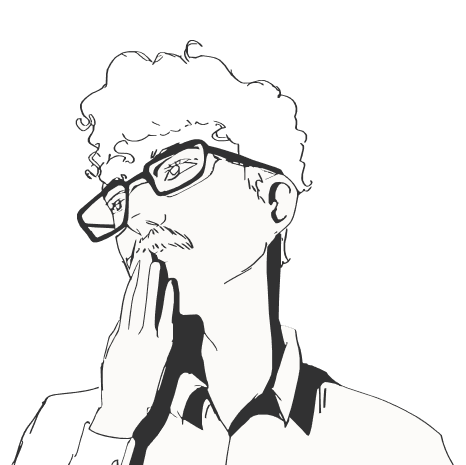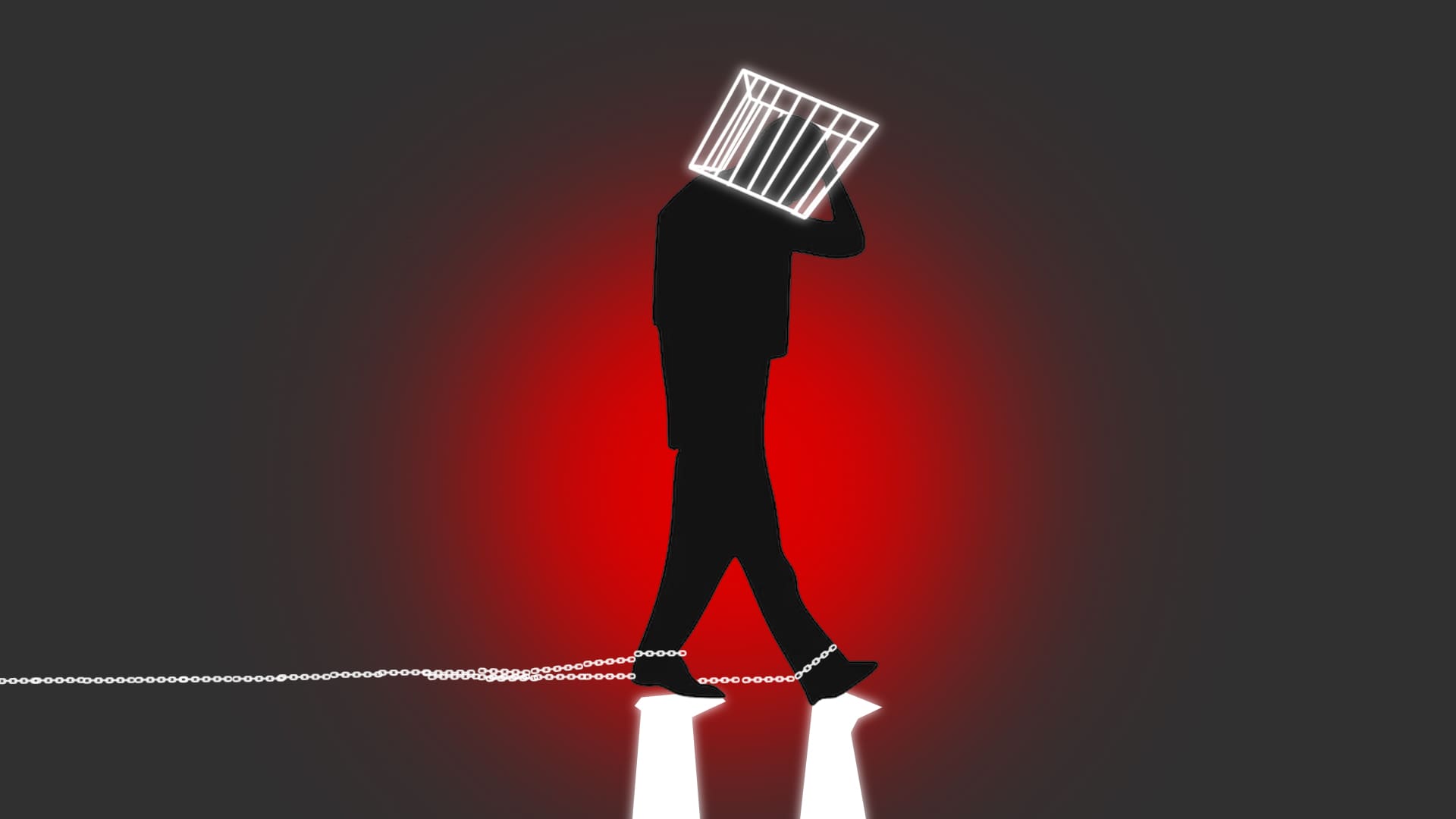

“I’m always looking out for their cars,” Ahmed says. The shortest distance between Ahmed’s home and his small shop in the market is about 20 minutes by public transport and on foot. It takes him at least 45 minutes. Though he has been out of detention for almost fifteen years, he still maps his commute through detours and ‘safe routes’, avoiding a branch of the intelligence services. Further along, he takes another detour to avoid an unofficial site where he was once held for a period during his more than four and a half years of unlawful detention. On foot and alert, his body reacts before his mind does. If a vehicle belonging to the authority that detained him passes, his head turns, his body steers clear, ducking down a side street.
A decade ago, “they” would often approach him on the street, at work, or at his house. Sometimes they would “just stop by to say hi”; other times they asked about names or flashed photographs. They have not approached him for years. Ahmed knows that most of the time now, he may be fleeing his own ghosts. Yet his body remembers. In a haunted landscape, ghosts are real. He remains perpetually alert, his eyes scanning his surroundings like a retired bouncer, categorising every face and place into “safe” versus “unsafe”.

Ahmed is a survivor of torture. He was not supposed to survive, but he did because a guard eventually showed mercy and made sure he was found and documented by the Red Cross. His state of alertness is at once an effect of his experiences of violence and a carefully crafted and maintained protocol that reassures him that he is safe. Ahmed’s experiences of violence are his alone: things he witnessed, situations he survived, transgressions he must live with, and the physical and emotional scars he carries. Survivors of such violence are never simply ‘through it’. Rather, they often describe living within a haunting atmosphere, anticipating violence, sometimes fearing time itself collapses, as if their present life is constantly negotiating with the past.
A haunted house
When security forces raided the home of Ahmed’s in-laws, where he and his family lived, they dragged him out in his pyjamas and threw him into an intelligence agency van, its blue lights flashing in the dark.
After more than four and a half years of humiliation, abuse and devastating hardship, Ahmed returned home. By then, he had lost a great deal of weight, and his teeth were in poor condition. To his community, he was a walking warning, a “ghost” returned from those assumed dead or disappeared. By all appearances, Ahmed is an ordinary Iraqi. He is a friendly and humble man with two sons, a marriage of 25 years and a job that supports his family. Beneath this outwardly ordinary life, he carries invisible wounds from a past that continues to haunt him. We often imagine violence through battlefields, blood, and broken bones. Butviolence also enters the homes and bodies of those who endure it, leaving lasting physical and emotional scars long after the violence has ended.
For years he struggled to come to terms with himself as a husband and father, torn between gratitude and guilt for surviving. As a survival mechanism in detention, he suppressed his emotional ties so much that he no longer recognised his wife and children when he was released. He describes himself as a poor husband to his wife and an even worse father during the first years after his release. When he returned from work, he would lock the doors and close the blinds. If something bothered him or his boys were too loud or got into a fight, he would lose his temper, yelled, and beat them. His home, he acknowledges now, became another prison, one where Ahmed began acting much like the torturer who broke him.
The UN Convention against Torture, which was ratified by Iraq in 2011, provides an international legal framework prohibiting such violations. However, Iraq has been reluctant to incorporate the treaty into itsdomestic judicial framework.

Torture is not new to Iraq. Governing through violence has defined how national and foreign authorities have ruled the country over the past century. The scale of torture is tied to a broader legacy of state violence and forced disappearance. Given the country’s history over the past half-century, Iraq has one of the world’s highest numbers of forcibly disappeared persons. The UN Committee on Enforced Disappearanceestimates that between 250,000 and one million people have been forcibly disappeared in the past five decades.
Because of the clandestine nature of torture, comprehensive and reliable data on the number of victims and survivors in Iraq remains scarce. A 2021 joint report by the UN Assistance Mission for Iraq (UNAMI) and the UN Human Rights Office, found that more than half of the detainees it interviewed, 122 of 235, reported torture or ill-treatment in custody, in accounts assessed as credible and reliable. While there is no publicly available information on the prison population in Iraq and the Kurdistan Region (KRI), the World Prison Brief estimates at least 67,000 inmates in Iraq, including pre-trial detainees. Testimonies fromformer prisoners, prison medical personnel, lawyers, trauma therapists, and human rights organisations indicates that the actual prevalence of torture may even be higher than the UN estimates. According to Human Rights Watch, the use of torture for punishment or confession remains a significant human rights issue in Iraq.

The international legal framework however remains focused on perpetrator accountability, largely neglecting how violence fractures entire communities economically, psychologically, and socially for generations. The afterlife of violence alters, shapes, and rewrites the personal histories of people like Ahmed and his loved ones. Ordinary routine is filtered through a profound sense of insecurity, and recovery is a lifelong endeavour.
Violence is intimate
After years of therapy, Ahmed feels content with life now. Recovery is not an end goal but a process. He knows that at any moment, a sound, a situation, or a smell can launch him back into traumatic memories.
“I still struggle with some things…” He looks down, his voice trailing off into silence. When he looks up, his eyes are glassy, though he forces a smile. “My wife says I’ve improved at least seventy-five percent,” he says. “But I…still struggle with some things…intimate things…I don’t want her to see me without clothes.” He was once beaten so severely by a guard the detainees nicknamed “the butcher” that he suffered permanent injuries to his genitals. As he speaks, Ahmed clenches his right ring and index finger in his left palm, a rhythmic, pulsating movement.
“We never knew their real names…but the worst was ‘the butcher’. I know him like I know my own sons,” Ahmed said. “The butcher destroyed me…”
He looks up. The wound is still there. We pause.
I ask if he wants a break. We stop for tea.

“One of the things that still troubles me is the poster,” he says as we return. Inside one of the rooms hung a poster with the UN logo. The butcher raped Ahmed with an object he believes was the leg of a chair or another piece of furniture. He did so while forcing him to face the poster, confronted with and abandoned by its promise and aspirations.
The sexual torture he experienced left a psychological fracture as deep as the physical wounds. Violence is intimate because it attacks and transforms the meaning of what is deemed familiar and safe. Such trauma does not remain confined to the interrogation room; it travels into the most private corners of Ahmed’s marriage.
Years later, the ghosts no longer wear uniforms. They are with him in the confines of his bedroom and in the mundane architecture of a public bathroom.
“I still have trouble going to the bathroom sometimes…they were so filthy…and the stench…it still bothers me…like when I use public bathrooms [at Mosques], I always clean it before I go, and sometimes I simply can’t, and I just leave because we had to run naked to latrines full of shit while they [the guards] counted down. Even today in my own house, when I go, I am very quick. I’m very conscious; you can probably sayI’m obsessed with cleanliness.” This is what violence smells like. Smells are intimate reminders with the power to provoke forgotten or suppressed memories, from delight to disgust.
In the name of the law
A devout Muslim, Ahmed was accused of being a member of a radical militant group, an allegation he vehemently denies. He never saw a court, was never charged or presented with any evidence. In fact, a prison official mockingly replied after Ahmed’s cellmates asked about their detention, “How can you be released? You’re not (even) here.” Silence fell over the cell after that. Ahmed realised that in the eye of the law, he did not exist. He was alive but effectively disappeared. Even though his relatives inquired about him with the authorities, they received no answer.
“Did you ever see a judge?” I ask, surprised that I had never asked him this before. “Yes, I saw a judge once,” Ahmed says. “When the Red Cross came to the prison.”
“Whenever they [the Red Cross] came to the prison, the guards ran down and hid us [political detainees] somewhere in the building, inside closets and under office desks etc. Once they threw me into a judge’s room and hid me under his desk. He was angry and cursed at me calling me a traitor and a donkey. Then he ordered me to open my mouth and bite on the tip of his shoe. The rest of the time, he put his feet up on my back and used me as a footstool. If I made a single sound, I was done. After the Red Cross left, they threw us back into the cells.”
Torture seeks to strip people of their sense of self through both arbitrary brutality and routine punishment. It disorients and can ultimately dismantle a person’s relationship with their own body, with others and with the world around them.
The impunity that Ahmed experienced and which characterises contemporary Iraq is closely linked to the development of modern punishment.
The use of torture and excessive violence is neither new nor unique to Iraq. Iraq is an example of how punishment developed in the modern era. In the name of modernity, imperial and colonial powers replaced the dark dungeons and medieval punishments. Instead, they developed modern large-scale prison facilities to house an ever-growing number of people, and, in the name of the law, developed techniques of governing and subjugating populations through incarceration and excessive use of coercion and violence.
Over the past century, there are stark differences in the methods deployed and the sheer scale of violence deployed by various Iraqi, colonial, and imperial regimes onto Iraqi bodies. However, the foundational role that violence (and the threat thereof) plays in politics and in Iraqi society remains.
While Ahmed is doing better, his body continues to negotiate with a gallery of ghosts every single day, independent of any calendar. His experiences belong to a much larger, invisible global population, from Sri Lanka to Northern Ireland, from Argentina to America, from diasporic and refugee communities to military veterans. It is a population consisting of those who survived, those who did not, and the loved ones left to carry what remains. Torture persists as a global phenomenon despite being illegal under international law. Amnesty International estimates that 141 countries still use torture and other cruel, inhuman or degrading treatment or punishment.

It is never too late to uphold human rights. It is never too late to reform national justice systems. It is never too late to end the impunity that lets perpetrators walk free. All of it matters, and all of it remains undone in Iraq and elsewhere. But no policy or protocol can achieve what survivors, and their families say they want most: acknowledgement of the pain they carry, and an apology. This may lay some of the ghosts to rest.